Проверка
Проверка
Проверка
Проверка
Проверка
Проверка
In the complex world of industrial automation and control systems, the reliability and safety of every component are paramount. Among these critical components, the limit switch plays a fundamental role in monitoring and controlling the position of machinery. When specifying such devices for applications, particularly within the European market and beyond, compliance with international standards is non-negotiable. This is where the EN 60947-5 standard, specifically for control circuit devices and switching elements, becomes essential. A limit switch conforming to EN 60947-5 is engineered to meet rigorous safety, performance, and durability criteria, ensuring seamless integration and dependable operation in demanding environments.
The EN 60947 series is a set of European standards, harmonized with the international IEC 60947 standards, governing low-voltage switchgear and controlgear. Part 5 of this series, EN 60947-5, is dedicated to control circuit devices and switching elements. This includes a wide range of products such as proximity switches, mechanical limit switches, and foot switches. The standard defines precise requirements for construction, operation, performance, and testing. For a limit switch, this encompasses key aspects like electrical ratings (e.g., rated insulation voltage, rated operational current), mechanical durability (number of operating cycles), degree of protection provided by the enclosure (IP code), and safety features to prevent hazards like electric shock or fire.
Choosing an EN 60947-5 compliant limit switch offers tangible benefits for engineers and system integrators. First and foremost, it guarantees a baseline of safety, ensuring the device can withstand operational overvoltages and has adequate insulation and clearance distances. This compliance is often a prerequisite for CE marking, which is mandatory for selling equipment in the European Economic Area. Furthermore, the standard ensures interoperability and reliability. A switch tested for millions of mechanical operations under specified electrical loads provides predictable longevity, reducing unplanned downtime and maintenance costs. The standardized dimensions and mounting arrangements also simplify installation and replacement procedures across different manufacturers' products that adhere to the norm.
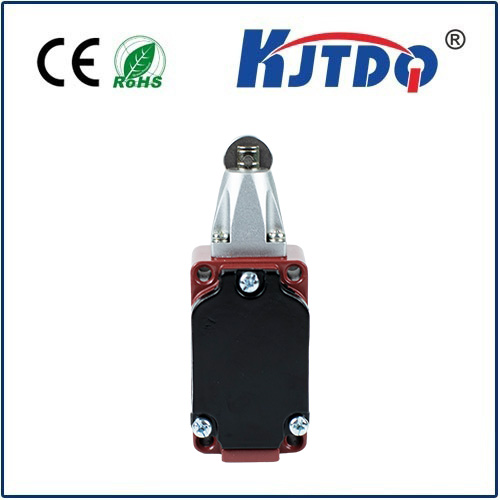
The application scope for these robust switches is vast. They are ubiquitous in manufacturing sectors such as automotive assembly lines, packaging machinery, material handling systems (including cranes and conveyors), and robotic cells. A typical use case is in a conveyor system, where a limit switch with a roller lever actuator is positioned to detect the presence or end-of-travel of a pallet. Upon actuation, it sends a control signal to stop the conveyor motor or trigger the next step in the sequence. In harsh environments—exposed to dust, moisture, oils, or constant vibration—the IP rating specified under EN 60947-5 (e.g., IP67 for dust-tight and temporary immersion protection) is a critical selection factor. The mechanical design of the actuator (roller, plunger, whisker) can be chosen based on the specific motion and force required for reliable triggering.
When selecting the appropriate limit switch for a project, several parameters must be aligned with both the application needs and the standard's specifications. Key considerations include the electrical load (AC or DC, voltage, and current), the required switching function (normally open, normally closed, or changeover), the mechanical actuator type and operating force, the housing material (metal or plastic for corrosion resistance), and the environmental protection rating. It is crucial to consult the manufacturer's datasheet, which should explicitly state compliance with EN 60947-5, and verify the specific clauses met. Proper installation, following the manufacturer's guidelines regarding wiring, mounting torque, and actuator alignment, is equally important to realize the full performance and safety benefits promised by the standard.
In conclusion, the EN 60947-5 limit switch represents more than just a simple mechanical sensor; it is a certified component built to a harmonized international benchmark for quality and safety. Its adoption facilitates the design of safer, more reliable, and compliant industrial control systems. For procurement specialists, maintenance engineers, and machine designers, understanding this standard is key to making informed decisions that enhance operational efficiency and ensure regulatory compliance. As automation continues to evolve, the foundational role of standardized, dependable components like the EN 60947-5 limit switch remains indispensable for the smooth and secure operation of industrial machinery worldwide.