Проверка
Проверка
Проверка
Проверка
Проверка
Проверка
In the world of industrial automation and electronic control systems, space constraints and precision requirements are constantly pushing the boundaries of component design. The miniature limit switch has emerged as a critical component, offering reliable performance in a remarkably small footprint. These compact devices are engineered to detect the presence or absence of an object, or to monitor positional limits, within a vast array of machinery and applications.
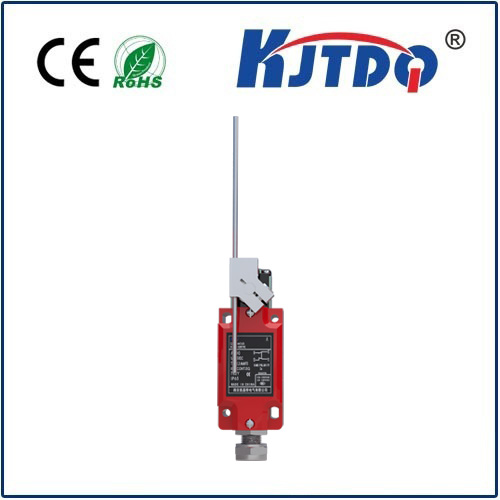
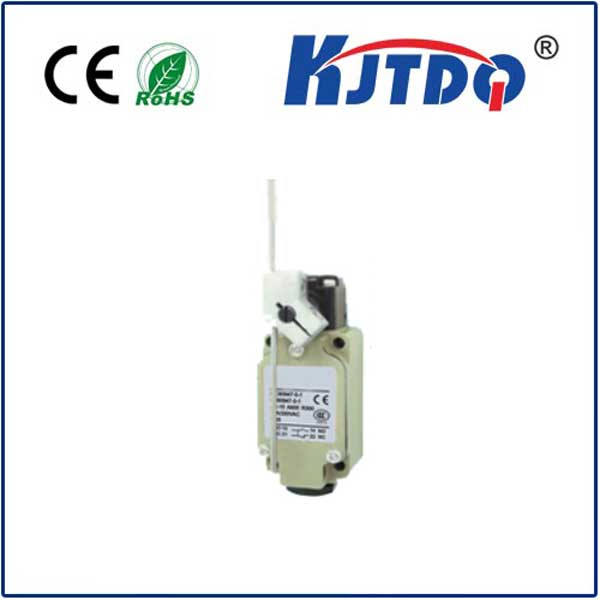
Unlike their larger counterparts, miniature limit switches are specifically designed for installations where real estate is at a premium. Their reduced size does not come at the cost of functionality or durability. Modern miniature limit switches are built with robust materials, such as thermoplastic or metal housings, and feature high-precision actuators like levers, rollers, or plungers. This construction ensures they can withstand millions of operational cycles, even in challenging environments with exposure to dust, moisture, or moderate mechanical shock.
The operational principle remains elegantly simple. When an external force moves the actuator to its predetermined position, it triggers an internal snap-action mechanism. This mechanism rapidly opens or closes an electrical circuit within the switch. This instantaneous change in electrical state sends a clear signal to a machine's control system—like a programmable logic controller (PLC)—to initiate a specific action. This action could be stopping a motor, changing the direction of a conveyor belt, counting items on a production line, or confirming the closed position of a safety guard.
The applications for these tiny powerhouses are extensive and diverse. In the manufacturing sector, they are indispensable for robotic assembly arms, CNC machines, and packaging equipment, ensuring precise movement and repeatability. Within the burgeoning field of 3D printing, miniature limit switches are used for homing and bed-leveling sequences, guaranteeing print accuracy from the first layer. They are also found in medical devices, automotive systems, vending machines, and even consumer electronics, providing essential feedback for safe and correct operation.
Selecting the right miniature limit switch requires careful consideration of several technical parameters. The electrical rating, including voltage and current (AC or DC), must match the control circuit's requirements. The type of actuator is chosen based on the nature of the target object and the required actuation force. Environmental protection, denoted by IP (Ingress Protection) ratings, is crucial for applications exposed to liquids or contaminants. Additionally, factors like operating temperature range, mechanical life expectancy, and the type of electrical termination (screw terminals, solder lugs, or pre-wired connectors) all play a role in ensuring optimal performance and longevity.
The integration of a miniature limit switch into a system is a straightforward process, but attention to detail is key for reliable operation. Proper mounting is essential to ensure the actuator makes consistent and accurate contact with the target object. Adjustable mounting brackets are often used to fine-tune the switch's position. The alignment of the actuator must be precise to avoid false triggering or premature wear. Regular maintenance, though minimal, involves periodic inspection for physical damage, checking for loose connections, and verifying the actuator moves freely without obstruction.
The evolution of the miniature limit switch continues alongside advancements in automation. Newer models may incorporate sealed designs for washdown environments in food and beverage processing, or offer enhanced resistance to vibration. The core value proposition, however, remains unchanged: to provide a highly reliable, cost-effective, and space-saving method for obtaining precise positional feedback. For engineers and designers tasked with creating smarter, more compact, and more efficient machines, the miniature limit switch remains an irreplaceable component in the toolkit of precision control.