Проверка
Проверка
Проверка
Проверка
Проверка
Проверка
In the intricate world of industrial automation and machinery, the reliability of every single component is paramount. Among these critical components, the humble limit switch plays a role far greater than its size suggests. Specifically, the 3-pin limit switch has become a cornerstone for countless applications, offering a perfect balance of simplicity, functionality, and durability. This guide delves into the world of the 3-pin limit switch, exploring its operation, key advantages, and why it remains an indispensable choice for engineers and maintenance professionals seeking dependable machine control.
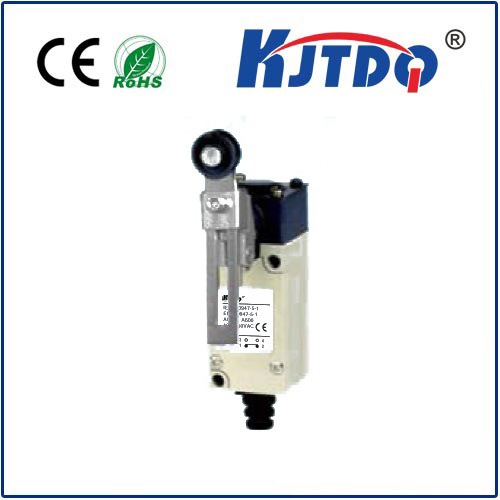
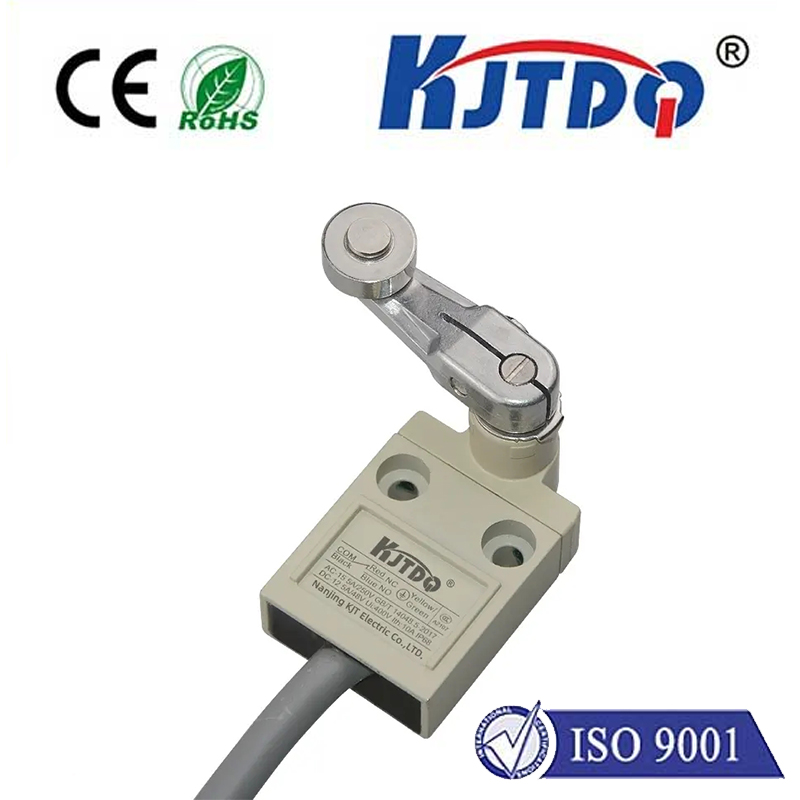
At its core, a limit switch is an electromechanical device designed to detect the presence or absence of an object, or to monitor the limits of movement. The "3-pin" designation refers to its standard electrical configuration: typically comprising a common terminal (C), a normally open contact (NO), and a normally closed contact (NC). This configuration provides exceptional versatility. In its resting state, the circuit between C and NC is complete, while the circuit between C and NO is open. When an actuator (like a cam, lever, or plunger) is triggered by a moving part of a machine, the switch's internal mechanism snaps over. This action breaks the connection between C and NC and simultaneously establishes a connection between C and NO. This clear, definitive signal is used to stop, start, or sequence operations in machinery, from conveyor belts and robotic arms to packaging equipment and safety gates.
The enduring popularity of the 3-pin limit switch is not accidental. It is built upon several compelling advantages that meet the rigorous demands of industrial environments. First and foremost is its straightforward design. The three-terminal setup is easy to understand, wire, and troubleshoot, even for technicians with basic electrical knowledge. This reduces installation time and minimizes errors. Secondly, these switches are renowned for their robustness. Housed in durable metal or high-grade polymer casings, they are engineered to withstand harsh conditions including dust, moisture, oil, and significant mechanical shock. The tactile, physical actuation provides a positive, audible feedback—a "click"—that confirms operation, a feature often missing in purely solid-state sensors.
Another significant benefit is electrical isolation and high current capacity. Unlike some low-voltage sensors, many 3-pin limit switches can directly control relays, contactors, or even smaller motors without the need for an intermediary amplifier. This ability to switch higher loads simplifies control panel design and reduces overall system complexity. Furthermore, their binary output (on/off) is immune to the signal noise that can sometimes affect analog or weakly-powered sensors, ensuring a reliable signal in electrically noisy plant environments.
When selecting a 3-pin limit switch for your application, several factors demand consideration. The actuator type is crucial: will it be a roller lever for detecting the edge of a material, a plunger for precise linear movement, or a rod-style for multi-directional operation? The electrical rating, including voltage (AC or DC) and current capacity, must match or exceed the load requirements. The housing material and ingress protection (IP) rating determine its suitability for the environment—whether it needs to be waterproof, oil-tight, or explosion-proof. Finally, mechanical life expectancy, often rated in millions of operations, should align with the duty cycle of the machine.
Common applications are everywhere in automation. They are used as end-of-travel stops for linear actuators to prevent overrun and damage. In assembly lines, they confirm the presence of a part in a fixture before a welding or drilling cycle begins. As safety interlocks on machine guards, they ensure the equipment cannot operate when a door is open. Their role is fundamental in creating interlocking control sequences that are both safe and efficient.
In conclusion, the 3-pin limit switch stands as a testament to the principle that effective design need not be overly complex. Its physical actuation, robust construction, and simple three-wire interface deliver a level of dependable performance that is critical for machine safety, precision, and uptime. While advanced sensor technologies continue to evolve, the fundamental reliability and clarity of the 3-pin limit switch ensure it will remain a vital component in the engineer's toolbox for controlling and safeguarding machinery for years to come. For anyone involved in machine design, maintenance, or repair, understanding and correctly applying this versatile device is a key skill for ensuring operational excellence.