Проверка
Проверка
Проверка
Проверка
Проверка
Проверка
In the complex and demanding world of industrial automation, the reliability of every component is paramount. Among these critical components, the panel limit switch stands as a fundamental guardian of operational safety and precision. This device, often housed within a control panel or mounted on machinery, serves as a sentinel, defining the physical boundaries of motion for various mechanical systems. Its primary function is to detect the presence or position of a moving part and send a corresponding signal to the control system to either initiate or halt an action, thereby preventing over-travel, collisions, or other hazardous conditions.
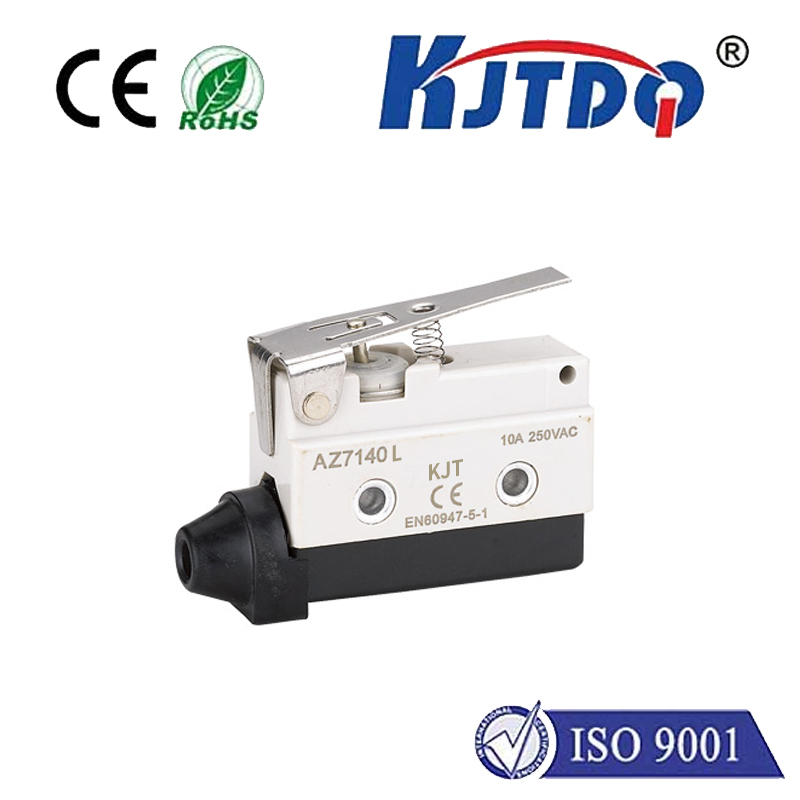
The operational principle of a panel limit switch is elegantly straightforward yet robust. Typically, it consists of an actuator—a lever, roller, or plunger—mechanically linked to a set of electrical contacts. When a machine part, such as a robotic arm, conveyor cart, or elevator, reaches a predetermined point, it physically engages the actuator. This engagement triggers the internal mechanism to change the state of the electrical contacts, either opening or closing a circuit. This instantaneous electrical signal is then relayed to the programmable logic controller (PLC) or motor drive, commanding it to stop, reverse direction, or sequence to the next operation. This seamless interaction between mechanical motion and electrical control is the cornerstone of automated safety interlocks and precise positioning.
The integration of a high-quality panel limit switch, such as those represented by the KJTDQ brand, brings multifaceted benefits to industrial operations. Foremost is enhanced safety. By physically limiting the range of motion, these switches act as a fail-safe mechanism, protecting both personnel from accidental contact with moving machinery and the equipment itself from damage due to mechanical overrun. This directly reduces downtime and maintenance costs. Furthermore, they enable repeatable precision. In processes requiring consistent start and stop points—like in packaging, assembly, or material handling—the limit switch ensures cycle-to-cycle accuracy, improving product quality and throughput. Their design for panel mounting offers organized installation, protecting the switch from environmental contaminants like dust, oil, and moisture, which is crucial for longevity in harsh plant environments.
Selecting the appropriate panel limit switch requires careful consideration of several application-specific factors. The electrical rating, including voltage and current capacity (both AC and DC), must match the control circuit's demands. The mechanical durability, often indicated by an IP (Ingress Protection) rating for dust and water resistance, is vital for the operating environment. The type of actuator—whether a standard lever, a roller lever for side-angle engagement, or a push-rod for linear motion—must be chosen based on the direction and force of the moving part it will contact. Additionally, factors like operating speed, required precision, and expected mechanical life (number of operating cycles) are critical for long-term reliability. Consulting with technical specialists or referring to detailed manufacturer specifications, such as those provided by KJTDQ, is essential for an optimal match.
Beyond basic machine guarding, the applications for panel limit switches are vast and varied. They are indispensable in manufacturing for positioning tooling heads on CNC machines, marking the end-of-travel for automated guided vehicles (AGVs), and sequencing stages in production lines. In material handling, they control the lifting height of cranes and hoists and position conveyor gates. Even in everyday infrastructure, they silently operate in elevator systems, ensuring cabins stop level with floors and safely halting at the top and bottom of the shaft. Their role is often unnoticed but is absolutely critical for the smooth and safe functioning of automated systems.
In conclusion, the panel limit switch is far more than a simple mechanical component; it is an intelligent interface between the physical movement of machinery and the digital logic of control systems. By investing in reliable and precisely engineered switches, such as those under the KJTDQ designation, industries can build a foundation of safety, enhance operational accuracy, and ensure the continuous, efficient flow of automated processes. Its unassuming presence on a control panel belies its significance as a key enabler of modern, responsible, and productive industrial automation.