In the intricate world of industrial automation and machinery control, precision and reliability are non-negotiable. Among the myriad components that ensure seamless operation, the contact limit switch stands as a fundamental and critical device. This electromechanical workhorse acts as a sentinel, monitoring the position or movement of objects and providing a definitive electrical signal to a control system. Its primary function is to define the boundaries of motion for a machine part, such as a robotic arm, conveyor belt, or elevator, preventing over-travel and potential damage.
At its core, a contact limit switch operates on a simple yet robust principle. It consists of an actuator—a lever, roller, or plunger—mechanically linked to a set of internal electrical contacts. When an external object, like a moving part of a machine, makes physical contact with the actuator, it triggers a change in the state of these contacts. This change, either opening or closing an electrical circuit, sends a clear signal to the programmable logic controller (PLC) or other control unit. For instance, a signal might indicate "the door is fully closed," "the pallet has reached the end of the line," or "the press is at its top position," allowing the system to proceed to the next logical step or initiate a safety shutdown.
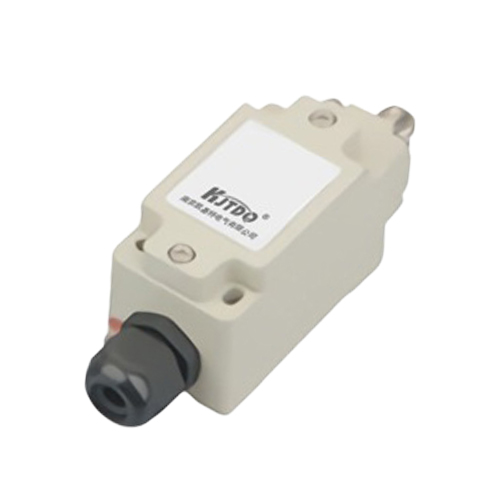
The design and construction of contact limit switches are tailored for harsh industrial environments. They are typically housed in rugged metal or high-grade plastic enclosures rated for specific Ingress Protection (IP) levels, safeguarding against dust, moisture, oil, and mechanical impact. This durability is paramount, as these switches are often exposed to constant vibration, temperature fluctuations, and repetitive physical contact. Manufacturers offer a wide array of actuator styles—from standard lever arms with adjustable rollers to compact plunger types—to suit diverse mechanical configurations and actuation forces.
Selecting the right contact limit switch involves careful consideration of several technical parameters. The electrical rating, including voltage and current capacity (both AC and DC), must match the control circuit's requirements. The type of contact arrangement, normally open (NO) or normally closed (NC), defines the switch's logic in its resting state. Operational life, measured in millions of mechanical cycles, is a key indicator of longevity. Furthermore, factors like repeat accuracy, operating speed, and environmental certifications (e.g., for explosive atmospheres) play a crucial role in application-specific suitability.
The applications of contact limit switches span virtually every sector of manufacturing and material handling. In automotive assembly lines, they ensure welding robots operate within their designated work envelopes. In packaging machinery, they detect the presence of a product and control the filling or sealing sequence. On large cranes and hoists, they serve as critical end-of-travel safety stops. Their physical, contact-based sensing method offers distinct advantages in scenarios where absolute positional certainty is required, unlike non-contact sensors which might be influenced by environmental interference.
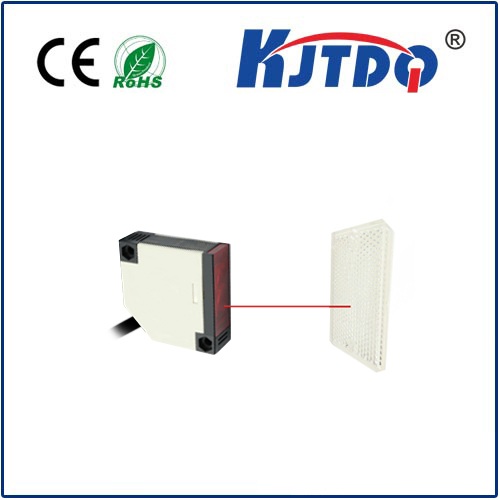
While modern non-contact alternatives like proximity sensors and photoelectric eyes have gained popularity, the contact limit switch remains irreplaceable for many tasks. Its key strengths lie in its simplicity, direct physical feedback, and high resistance to electrical noise. The definitive "feel" of mechanical contact provides an unambiguous signal that is easy to troubleshoot and integrate into legacy control systems. For maintenance technicians, a visibly actuated switch offers immediate diagnostic clarity that is sometimes absent in purely electronic sensors.
Proper installation and routine maintenance are vital to maximizing the service life and reliability of these components. Switches must be securely mounted to avoid misalignment from vibration. The actuator should be positioned so that the contacting machine part engages it positively without causing excessive force or side-loading. Periodic inspection for wear on the actuator mechanism, checking for loose terminals, and verifying the integrity of the enclosure seals can prevent unplanned downtime. Understanding the operational context allows for predictive replacement before failure occurs.
In conclusion, the contact limit switch is a testament to enduring engineering principles in an increasingly digital age. It provides a reliable, cost-effective, and intrinsically safe solution for position detection and motion control. For engineers designing new systems or technicians maintaining existing ones, a deep understanding of its operation, selection criteria, and application best practices is essential for ensuring both efficiency and safety on the plant floor. Its continued prevalence underscores that sometimes, the most effective solution is one that delivers a simple, physical confirmation through direct contact.