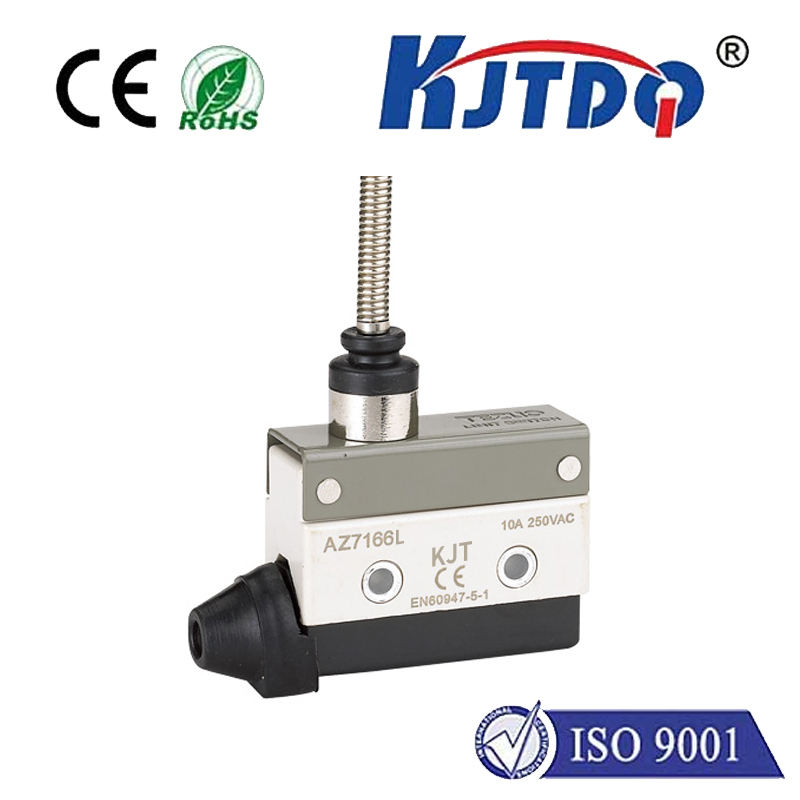
In the dynamic landscape of industrial automation, precision and reliability are non-negotiable. Among the myriad of components that ensure seamless operations, the wobble stick limit switch stands out as a critical device for detecting the presence or position of objects in a wide range of applications. Unlike traditional limit switches that require direct physical contact or precise alignment, the wobble stick switch operates on a simple yet ingenious principle. It features a flexible rod or "stick" that, when deflected by an object, triggers an internal switching mechanism. This design offers distinct advantages, particularly in environments dealing with bulk materials, packaging lines, or automated assembly systems.
The core functionality of the wobble stick limit switch lies in its ability to detect objects without the need for exact positioning. As materials or products pass by and make contact with the wobble stick, it bends, activating the switch. This action can be used to start or stop conveyors, count items, signal bin levels, or initiate subsequent process steps. Its forgiving nature makes it exceptionally suitable for detecting irregularly shaped items, lightweight objects, or materials in free fall, where other sensor types might fail. The typical construction involves a robust housing, often rated for IP67 or higher, protecting the internal electrical components from dust, moisture, and mechanical impact common in industrial settings. The stick itself is usually made from durable materials like stainless steel or engineered polymers, chosen based on the application's chemical and physical demands.
One of the primary benefits driving the adoption of wobble stick limit switches is their contribution to operational efficiency. By providing reliable detection, they help prevent jams, overfills, and equipment damage, minimizing costly downtime. In silo or hopper level detection, for instance, a wobble switch can reliably indicate high or low material levels, enabling automated control of filling processes and preventing spillage or run-out conditions. This not only optimizes material usage but also reduces waste and manual intervention. Furthermore, their mechanical simplicity often translates to lower maintenance requirements compared to more complex photoelectric or proximity sensors. There are no lenses to clean or complex electronics to calibrate; a visual inspection of the stick's integrity is often sufficient for routine checks.
When it comes to safety, these devices play a pivotal role. In automated machinery, ensuring that a guard is in place or that a part is correctly positioned before initiating a cycle is paramount. Wobble stick limit switches can be strategically installed to act as safety interlocks. For example, a switch can be placed so that its stick is only in the non-actuated position when a safety door is securely closed. If the door is opened, the stick returns to its neutral position, breaking the circuit and stopping the machine immediately, thereby protecting personnel from potential harm. This failsafe functionality is a cornerstone of modern machine safety standards.
Selecting the right wobble stick limit switch requires careful consideration of several application-specific factors. The length and stiffness of the stick must be matched to the size, weight, and speed of the objects to be detected. The operating environment dictates the required ingress protection (IP) rating and material compatibility—for instance, a stainless-steel housing and stick for washdown areas in food processing. Electrical specifications, such as voltage, current rating, and output type (e.g., SPDT, NPN, PNP), must align with the control system. Additionally, the reset characteristic—whether the switch returns automatically after deflection or requires manual reset—is chosen based on the process logic.
Installation and orientation are also crucial for optimal performance. The switch should be mounted securely to withstand vibration and repeated actuation. The stick's range of motion must be unobstructed, and its neutral position should be set correctly according to the manufacturer's guidelines. For detection in bulk material handling, the switch is often installed at an angle to ensure consistent engagement with the material flow. Regular testing as part of a preventive maintenance schedule ensures the switch continues to operate reliably over its long service life.
In conclusion, the wobble stick limit switch is a testament to practical engineering solving real-world industrial challenges. Its robust, straightforward design provides a highly reliable solution for object detection and position sensing where other methods may be less effective. By enhancing both the efficiency of automated processes and the safety of industrial workplaces, it remains an indispensable component in sectors ranging from manufacturing and packaging to food and beverage and plastics. As industries continue to strive for greater automation and smarter control, the dependable wobble stick limit switch will undoubtedly continue to be a key enabler, ensuring machines operate smoothly, safely, and productively.