Проверка
Проверка
Проверка
Проверка
Проверка
Проверка
In the intricate world of industrial automation and precision machinery, countless components work in silent unison to ensure flawless operation. Among these, the whisker limit switch stands out as a remarkably simple yet profoundly reliable sentinel. Often overlooked in favor of more complex sensors, this electromechanical device plays a critical role in safety, positioning, and sequence control across diverse applications, from manufacturing assembly lines to sophisticated robotic arms.
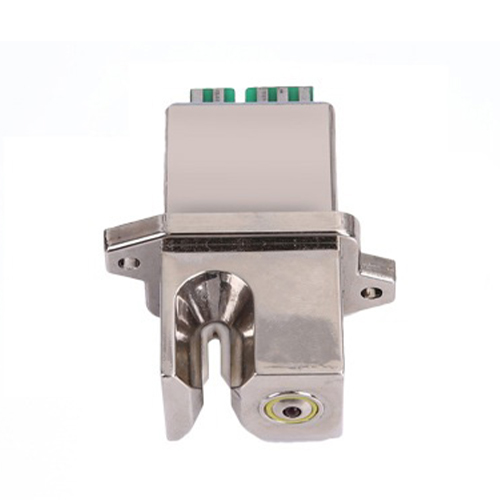
A whisker limit switch, as the name suggests, operates on a principle reminiscent of a cat's whiskers. It typically consists of a sturdy housing containing an electrical switch mechanism. The actuator is a thin, flexible metal wire or rod—the "whisker." When an object or target makes physical contact with this whisker, it deflects, triggering the internal switch to change state. This action either opens or closes an electrical circuit, sending a clear, unambiguous signal to the machine's control system. The beauty of this design lies in its directness; there is no need for complex interpretation of light beams, magnetic fields, or proximity. The contact is tangible and definitive.
The advantages of employing whisker limit switches are numerous and contribute significantly to their enduring relevance. First and foremost is their exceptional reliability. With minimal electronic components and a robust mechanical design, they are highly resistant to environmental interference such as electromagnetic noise, oil, dust, and coolant splashes that can plague optical or capacitive sensors. This makes them ideal for harsh industrial environments. Secondly, they offer excellent repeatability. The physical actuation point is consistent, providing dependable feedback for positioning tasks, like defining the home position of a moving carriage or the end-of-travel limit for a linear actuator.
Furthermore, whisker limit switches are incredibly versatile and cost-effective. The whisker itself can be customized in length, material, and stiffness to suit specific applications. A longer, more flexible whisker might be used for detecting the presence of lightweight objects on a conveyor, while a shorter, stiffer version could act as a hard stop for a heavy door. Their installation and setup are straightforward, requiring no complex programming or calibration, which reduces downtime and maintenance costs. In many safety-critical applications, this simple mechanical reliability is preferred as a fail-safe detection method.
Consider a practical scenario in packaging machinery. A whisker limit switch might be positioned to detect when a product carton is correctly in place for sealing. As the carton pushes against the whisker, the switch signals the sealer to activate. In robotics, these switches often serve as limit sensors to prevent arms from moving beyond their mechanical boundaries, protecting both the robot and its surroundings. Even in everyday appliances like garage door openers, a form of whisker switch ensures the door reverses direction if it encounters an obstacle.
While modern sensing technologies like photoelectric and inductive proximity sensors offer non-contact operation and faster response times, the whisker limit switch occupies a unique and irreplaceable niche. Its fundamental principle of physical contact remains the gold standard for applications where absolute certainty of presence or position is required. It is a testament to the enduring power of simple, elegant engineering solutions in an increasingly digital world. For engineers and system designers, specifying a whisker limit switch is often a decision rooted in pragmatism—choosing proven, durable performance for mission-critical detection tasks.
In conclusion, the whisker limit switch is far from an obsolete technology. It is a fundamental building block of industrial control, offering a blend of durability, simplicity, and cost-effectiveness that is hard to match. Its continued use in both traditional and modern systems underscores a vital engineering truth: sometimes, the most effective solution is also the most straightforward one. By providing a clear, physical signal in response to contact, this unassuming device ensures precision, safety, and reliability in countless automated processes every day.