Проверка
Проверка
Проверка
Проверка
Проверка
Проверка
In the world of industrial lifting and material handling, precision and safety are non-negotiable. Cranes, the workhorses of construction sites, shipping ports, and manufacturing facilities, perform heavy-duty tasks that demand reliable control over their rotational movement. This is where the specialized rotary limit switch for crane systems becomes an indispensable component, acting as the guardian of operational boundaries and the enabler of automated cycles.
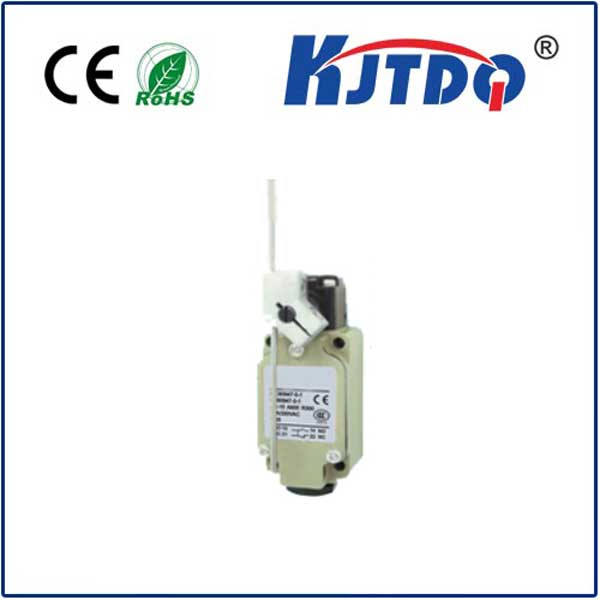
A rotary limit switch, in essence, is an electromechanical device designed to monitor and control the angular position or number of revolutions of a rotating shaft. When integrated into crane machinery, such as slewing (rotation) mechanisms or hoist winches, it provides critical feedback to the control system. Its primary function is to define and enforce safe rotational limits, preventing the crane's boom or hook from traveling beyond its designated working radius. By cutting power or sending a signal to reverse motion at pre-set points, it effectively eliminates the risk of mechanical overtravel, which could lead to catastrophic structural damage, load drops, or collisions with adjacent infrastructure.
The operational principle is elegantly straightforward. The switch is mechanically coupled to the crane's rotating component. As the shaft turns, it drives an internal gear train within the switch, which in turn rotates one or more cams mounted on a common shaft. These cams are meticulously adjusted to specific angular positions corresponding to the desired "start," "stop," or "intermediate" points in the crane's rotation. When a cam rotates into position, it actuates a set of heavy-duty, snap-action micro-switches. The opening or closing of these switch contacts sends an immediate electrical signal to the crane's motor controller, executing the commanded action with high repeatability.
The advantages of employing a robust rotary limit switch for crane applications are multifaceted. Foremost is enhanced safety. By automating the limitation of rotation, it removes the potential for human error from the operator, creating a fail-safe mechanism that protects both personnel and equipment. This directly contributes to regulatory compliance with stringent industry safety standards. Secondly, it boosts operational efficiency and reduces wear. Precise limit control allows for faster, more consistent cycling of the crane without the need for cautious, manual "inching" toward endpoints. This minimizes stress on gears, motors, and structural bearings, leading to lower maintenance costs and extended equipment service life. Furthermore, these switches facilitate automation. They can be programmed to trigger sequential operations—like slowing down as a limit approaches or activating auxiliary functions at specific angles—paving the way for sophisticated, automated material handling processes.
When selecting a rotary limit switch for a crane, several key specifications demand attention. The housing must be engineered for harsh industrial environments, typically featuring a cast aluminum or robust steel enclosure with a high IP (Ingress Protection) rating to withstand dust, moisture, oil, and vibration. The internal switching elements should offer high electrical capacity and durability to handle the inductive loads of crane motors. The precision and adjustability of the cam settings are crucial for fine-tuning limits. Additionally, options like absolute encoders for position feedback or redundant switch contacts for safety-critical circuits may be necessary depending on the crane's complexity and risk assessment.
Modern advancements have introduced more sophisticated electronic alternatives, such as rotary encoders and proximity sensors. However, the traditional electromechanical rotary limit switch retains a dominant position in crane technology due to its proven reliability, simplicity, inherent safety (failsafe in a power-off state), and excellent resistance to electrical noise commonly found in industrial settings. It provides a tangible, adjustable, and easily understood control point that maintenance technicians can troubleshoot and calibrate with standard tools.
In conclusion, the rotary limit switch for crane is far more than a simple component; it is a fundamental safety sentinel and productivity enhancer. Its role in defining precise rotational boundaries ensures that every lift and slew operation is performed within a safe envelope, protecting valuable assets and human lives. For engineers, facility managers, and crane operators, specifying and maintaining a high-quality rotary limit switch is a critical investment in operational integrity, driving both safety and efficiency in demanding lifting environments. Its mechanical certainty continues to be a trusted foundation upon which modern crane automation and safety systems are reliably built.