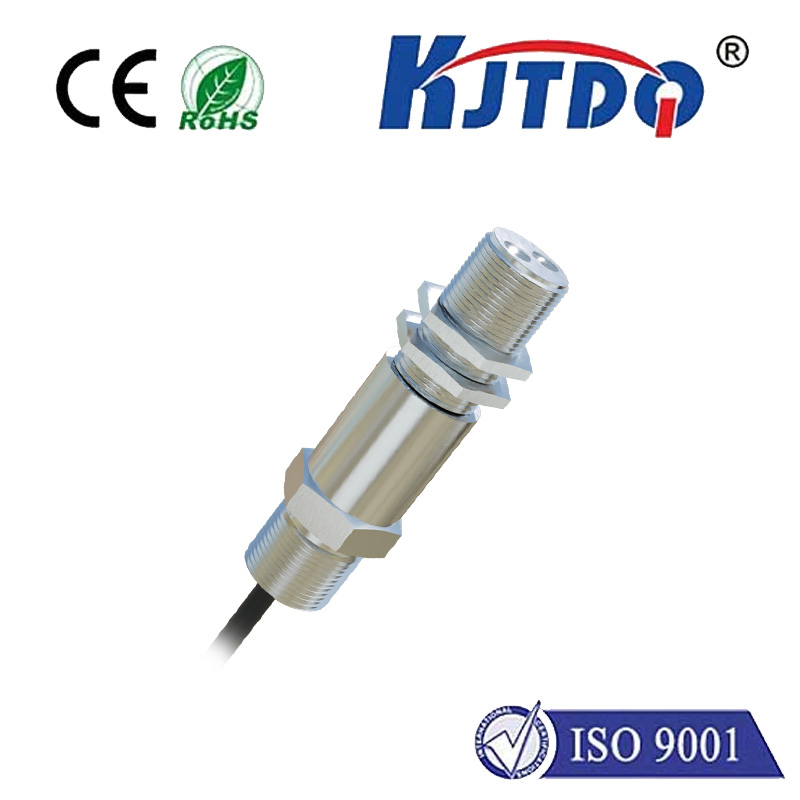
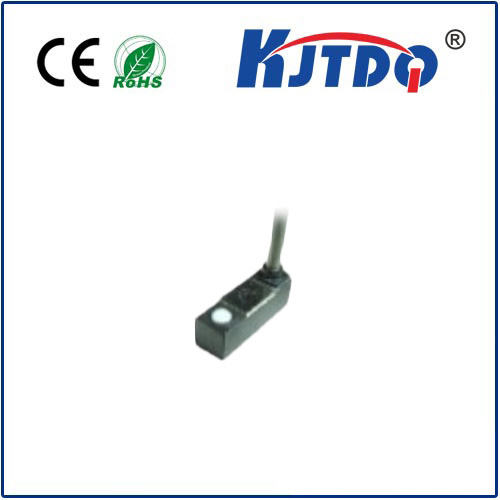
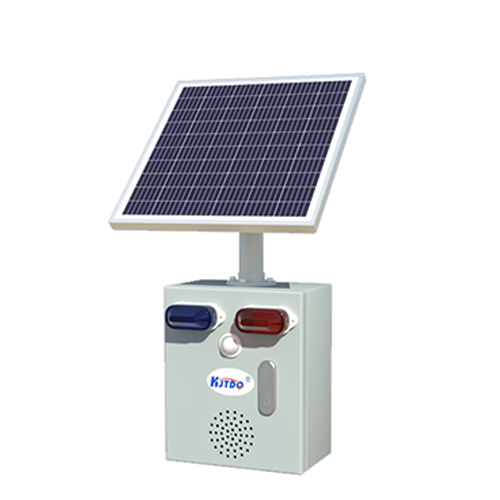
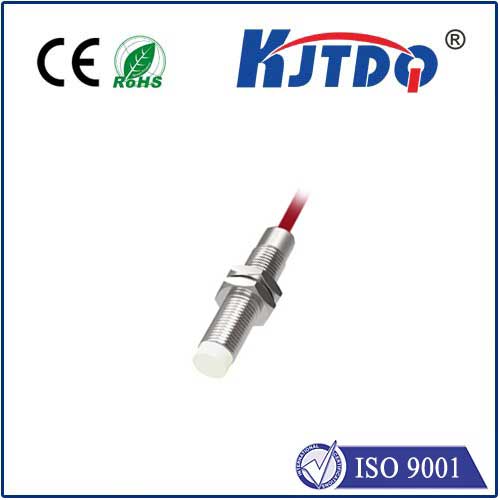
In today's rapidly advancing industrial and technological landscape, the demand for high-precision, reliable, and non-contact measurement solutions has never been greater. Among the forefront of these solutions is laser optical sensor technology, a field where KJTDQ has established itself as a significant contributor. These sensors represent a paradigm shift in how industries approach automation, quality control, and data acquisition, offering unparalleled accuracy in environments where traditional methods fall short.
The core principle of a laser optical sensor involves emitting a focused beam of light—typically from a laser diode—towards a target object. The sensor then detects the properties of the reflected or scattered light. By analyzing changes in the light's position, intensity, or phase, the sensor can precisely determine various parameters such as distance, displacement, thickness, vibration, or even the presence of an object. This non-contact nature is a critical advantage, eliminating mechanical wear, preventing damage to delicate surfaces, and enabling measurements of objects in motion or in hazardous environments.
KJTDQ laser optical sensors are engineered to excel in challenging applications. In manufacturing and assembly lines, they are indispensable for tasks like precise positioning of robotic arms, verifying component dimensions with micron-level accuracy, and conducting 100% inline inspection to detect microscopic defects. This relentless pursuit of precision directly translates to reduced waste, higher product quality, and optimized production throughput. Beyond the factory floor, these sensors play a vital role in sectors such as logistics for parcel dimensioning, in automotive for alignment and gap measurement, and in aerospace for structural health monitoring.
What sets advanced laser optical sensors apart is their robustness and adaptability. Modern versions are designed to compensate for environmental variables like ambient light interference, temperature fluctuations, and varying surface colors or reflectivity. Sophisticated algorithms process the raw optical data, filtering out noise to deliver stable and reliable readings. This ensures consistent performance whether installed in a clean laboratory or on a dusty, vibrating industrial machine. The integration of smart features, such as programmable logic and easy connectivity to PLCs or industrial networks, further simplifies system integration and data logging.
The implementation of KJTDQ laser sensor technology drives tangible operational efficiencies. By providing real-time, high-fidelity data, these sensors form the sensory backbone of intelligent automation systems. They enable predictive maintenance by monitoring machine vibration trends, ensure stringent quality standards are met without slowing down production, and facilitate the collection of valuable process data for continuous improvement analytics. This data-driven approach empowers engineers and managers to make informed decisions, streamline operations, and ultimately enhance competitiveness.
Looking ahead, the evolution of laser optical sensing is intertwined with trends like Industry 4.0 and the Industrial Internet of Things (IIoT). The next generation of sensors will feature enhanced connectivity, edge computing capabilities for local data processing, and even greater miniaturization. This will unlock new applications in fields like autonomous mobile robots, advanced biomedical devices, and smart infrastructure. The foundational promise remains: to deliver exact, actionable information about the physical world.
For engineers, system integrators, and decision-makers seeking to push the boundaries of precision and automation, understanding and leveraging laser optical sensor technology is no longer optional—it is essential. It represents a strategic investment in capability, quality, and future-readiness. By choosing robust and innovative solutions, organizations can build more responsive, efficient, and intelligent operational ecosystems, turning measurement challenges into opportunities for growth and innovation.