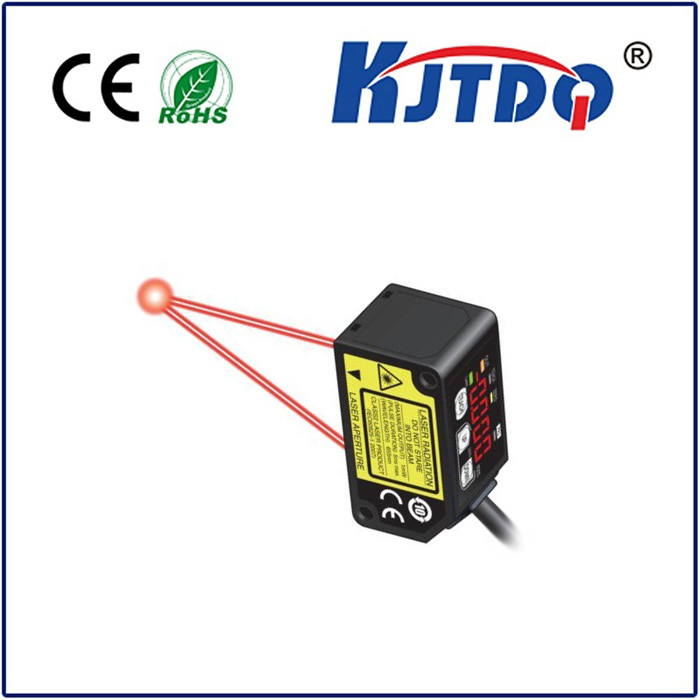
In the realm of precision measurement, the laser distance module sensor stands as a pivotal technological advancement, driving innovation across countless industries. This compact yet powerful device utilizes laser technology to calculate distances with remarkable accuracy, often down to the millimeter level. Unlike traditional measuring tools such as tape measures or ultrasonic sensors, laser modules offer non-contact operation, high speed, and exceptional reliability, making them indispensable in modern automation and quality control processes.
The core principle behind a laser distance module sensor is based on the time-of-flight (ToF) method or phase-shift analysis. Essentially, the sensor emits a focused laser beam towards a target. The beam reflects off the surface and returns to a receiver within the module. By precisely calculating the time taken for this round trip or analyzing the phase shift of the modulated laser light, the sensor's internal processor can determine the distance with incredible precision. This method eliminates human error and provides consistent, repeatable results crucial for industrial applications.
The applications for these sensors are vast and varied. In robotics and automation, laser distance modules are integral for navigation, obstacle avoidance, and precise positioning of robotic arms. They enable machines to "see" and interact with their environment intelligently. In the construction and surveying sectors, these sensors are used in tools like laser rangefinders and total stations for fast, accurate distance and area calculations, streamlining site planning and layout. Furthermore, the logistics industry leverages them for warehouse automation, pallet measurement, and inventory management, optimizing space and operational efficiency. Even in consumer electronics, they find roles in autofocus systems for cameras and gesture recognition.
When selecting a laser distance module sensor, several key specifications demand attention. Measurement range is paramount, with options available from short-range (a few centimeters) to long-range (hundreds of meters). Accuracy and resolution define the sensor's precision, typically specified in millimeters or even smaller units. The response time, or how quickly the sensor can take and output a measurement, is critical for high-speed applications. Environmental robustness is another factor; industrial-grade sensors often feature high IP ratings for dust and water resistance, ensuring stable performance in harsh conditions. Finally, the output interface—such as UART, I2C, analog voltage, or RS485—must be compatible with the host system for seamless integration.
The integration of a laser distance module into a system is generally straightforward. Most modules come with detailed communication protocols. Developers can connect them to microcontrollers like Arduino or Raspberry Pi, or directly to industrial PLCs, using simple wiring and sending/receiving standardized data commands. This plug-and-play nature, combined with their small form factor, allows for flexible deployment in space-constrained designs. For instance, integrating a module into a mobile robot involves mounting it securely, connecting it to the main control board, and programming the logic for interpreting distance data to make navigation decisions.
Looking ahead, the future of laser distance sensing is bright. Trends point towards even smaller modules with higher accuracy and longer ranges. The integration of multi-sensor fusion, combining laser data with visual cameras or inertial measurement units (IMUs), will enable more sophisticated perception systems for autonomous vehicles and advanced robotics. Furthermore, advancements in signal processing algorithms will improve performance in challenging conditions, such as measuring against poorly reflective or moving targets.
In conclusion, the laser distance module sensor is far more than a simple measuring tool; it is a fundamental enabler of automation, safety, and efficiency. Its ability to deliver fast, accurate, and reliable distance data empowers engineers and developers to create smarter, more responsive systems. As technology continues to evolve, these versatile sensors will undoubtedly unlock new possibilities, solidifying their role as a cornerstone of modern industrial and technological innovation.