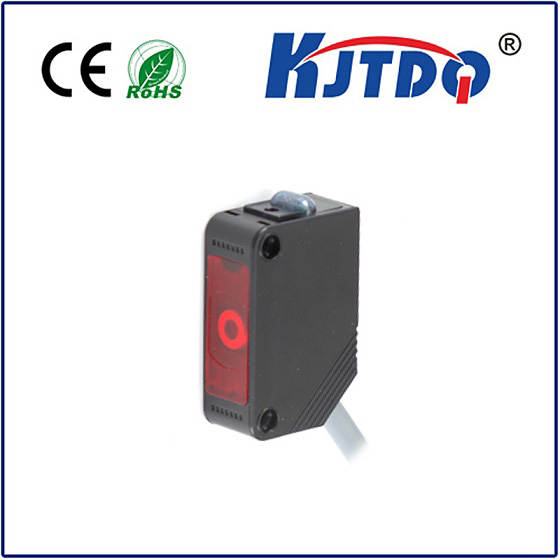
In today's rapidly advancing technological landscape, the demand for accurate and reliable detection systems has never been higher. Among the various solutions available, the laser sensor module stands out as a cornerstone of modern automation, robotics, and quality control processes. This guide delves into the fundamental principles, diverse applications, and key selection criteria for laser sensor modules, providing essential insights for engineers, system integrators, and industry professionals seeking to enhance their operational precision.
At its core, a laser sensor module operates by emitting a focused beam of light towards a target object. The sensor then analyzes the reflected light to determine specific parameters such as distance, displacement, presence, or thickness. Unlike conventional photoelectric sensors, laser-based modules utilize coherent light, which results in a highly concentrated beam with minimal divergence. This characteristic allows for exceptional accuracy over longer ranges and the ability to detect minute objects or precise edges. Common technologies integrated into these modules include time-of-flight (ToF), triangulation, and confocal measurement principles, each suited for different measurement scenarios and environmental conditions.
The versatility of laser sensor modules is evident across a multitude of industries. In manufacturing and assembly lines, they are indispensable for precise positioning, dimensional gauging, and defect detection, ensuring products meet stringent quality standards. The logistics and warehousing sector relies on them for automated guided vehicle (AGV) navigation, package dimensioning, and inventory management. Furthermore, in the realm of consumer electronics, these modules enable functionalities like facial recognition and autofocus in smartphones. Their non-contact nature makes them ideal for applications involving delicate, hot, or fast-moving objects where physical probes would be impractical or damaging.
Selecting the appropriate laser sensor module requires careful consideration of several technical specifications. Key factors include measurement range, resolution, repeatability, and response time. The operating environment also plays a crucial role; factors such as ambient light, dust, vibration, and temperature extremes can affect performance. Therefore, modules with robust housings, specific ingress protection (IP) ratings, and built-in environmental compensation features are often necessary for industrial settings. Additionally, output interfaces (e.g., analog voltage, digital IO, RS-232, Ethernet) must be compatible with the existing control system for seamless integration.
Recent advancements continue to push the boundaries of what laser sensor modules can achieve. Innovations focus on miniaturization, reducing power consumption, and enhancing data processing capabilities through integrated smart sensors. The development of multi-function modules that can simultaneously measure distance, profile, and reflectivity is also gaining traction. These improvements are paving the way for more sophisticated applications in emerging fields like autonomous vehicles, where LiDAR (Light Detection and Ranging) systems, a specialized form of laser sensing, are critical for environmental mapping and obstacle avoidance.
Implementing a laser sensor module effectively involves more than just mounting the device. Proper alignment, calibration, and understanding the target surface properties are essential for optimal performance. Highly reflective or transparent materials may require specific sensor models with adjustable sensitivity or specialized algorithms. Regular maintenance, including lens cleaning and verification checks, ensures long-term reliability and measurement consistency. By adhering to best practices for installation and operation, users can fully leverage the high precision and stability that laser sensor technology offers.
In conclusion, the laser sensor module is a pivotal component driving efficiency and accuracy in automated systems. Its ability to provide fast, non-contact, and highly precise measurements makes it an invaluable tool across diverse sectors. As technology evolves, these modules will become even more intelligent, compact, and integral to the next generation of smart factories, intelligent infrastructure, and advanced robotic systems. Understanding their capabilities and proper application is key to unlocking their full potential and maintaining a competitive edge in an increasingly automated world.