In the world of industrial automation and precision engineering, achieving accurate, non-contact measurement is not just a goal—it’s a fundamental requirement for quality, efficiency, and innovation. At the heart of this capability lies a critical component: the laser displacement sensor. This technology has revolutionized how industries inspect, control, and monitor processes, offering unparalleled accuracy where traditional contact methods fall short. This guide delves into the core principles, diverse applications, and key selection criteria for laser displacement sensors, providing essential insights for engineers and decision-makers.
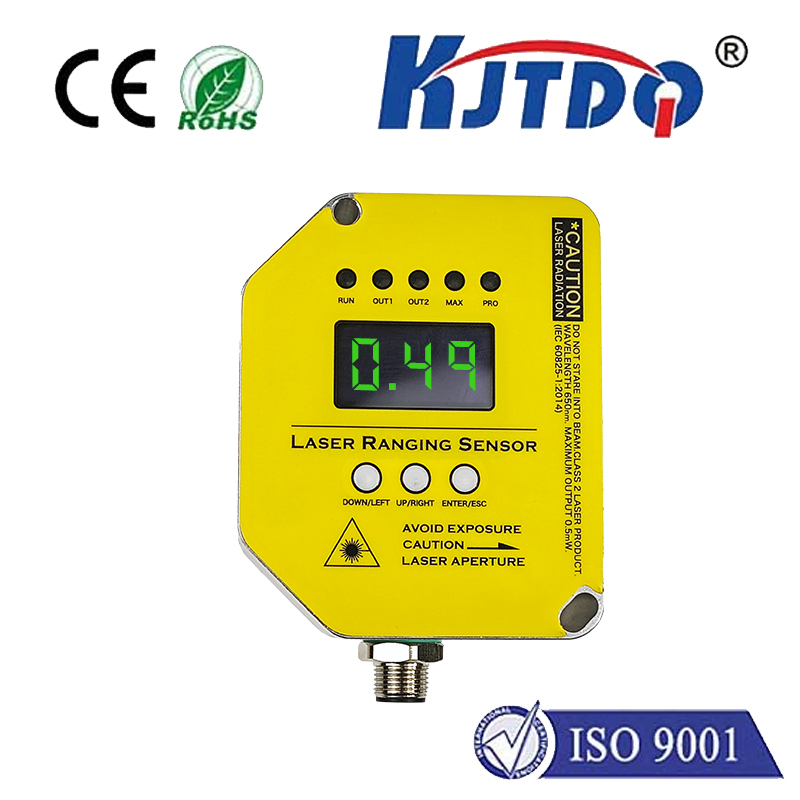
The fundamental operating principle of a laser displacement sensor is based on triangulation. The sensor projects a focused laser beam onto the target object's surface. The reflected light is then captured by a receiving lens at a specific angle and focused onto a sensitive position-detecting element, such as a CCD or PSD. Any change in the distance to the target causes a proportional shift in the position of the light spot on this detector. By precisely calculating this shift, the sensor determines the exact displacement or distance with micron-level resolution. This non-contact method eliminates the risk of damaging delicate surfaces and allows for high-speed measurements on moving or vibrating objects, a feat impossible for tactile probes.
The applications of laser displacement sensors span virtually every manufacturing sector. In the automotive industry, they are indispensable for measuring body panel gaps, inspecting weld seam profiles, and ensuring the precise thickness of brake discs. Electronics manufacturers rely on them to verify the coplanarity of chip leads, measure solder paste height on PCBs, and inspect micro-components. In metal processing, these sensors control roll gap distances, measure sheet flatness, and monitor thickness in real-time during production. Furthermore, they play a vital role in robotics for precise guidance and positioning, and in 3D scanning systems for reverse engineering and quality control. Their versatility in handling different materials, colors, and surface finishes makes them a universal tool for metrology.
Selecting the right laser displacement sensor requires careful consideration of several technical parameters. The first is measuring range and stand-off distance, which define the operational window. Resolution and linearity are paramount for accuracy, indicating the smallest detectable change and the consistency of measurements across the entire range, respectively. Sampling speed, or measurement frequency, is critical for high-speed production lines; a faster sensor captures more data points per second, ensuring no defects are missed. The laser spot size determines the minimum feature that can be measured, which is essential for small parts. Environmental factors like ambient light, dust, and temperature fluctuations must also be considered, with many industrial-grade sensors featuring robust housings and filters to ensure stable performance in harsh conditions. Finally, the output interface (analog, digital, Ethernet) must be compatible with the existing control system.
Modern advancements continue to push the boundaries of what laser displacement sensors can achieve. High-speed models now operate at frequencies exceeding 100 kHz, capturing minute details on fast-moving production lines. The development of blue laser technology offers significant advantages for measuring challenging surfaces like transparent materials or hot metals, which traditionally scatter red laser light. Integrated onboard processors now allow for in-sensor data analysis and decision-making, reducing the load on central PLCs. Furthermore, the integration with smart factory frameworks and Industrial IoT platforms enables predictive maintenance, trend analysis, and centralized data management, transforming raw measurement data into actionable intelligence.
Implementing a laser displacement sensor system effectively goes beyond just mounting the hardware. Proper installation is crucial; the sensor must be aligned correctly to the target, and mounting stability is necessary to avoid vibration-induced errors. Regular calibration against known standards maintains long-term accuracy. Understanding the target surface's properties is also key, as highly reflective or absorbent surfaces may require specific sensor models or settings. Many suppliers offer application engineering support to help optimize setup for specific challenges, ensuring users extract maximum value from their investment.
In conclusion, the laser displacement sensor is a cornerstone of modern precision measurement. Its ability to deliver fast, accurate, and reliable data without contact makes it an irreplaceable asset for ensuring product quality, optimizing processes, and driving automation forward. From controlling robotic arms to guaranteeing the safety of critical components, this technology provides the eyes for automated systems. As manufacturing demands grow more stringent, the role of the laser displacement sensor will only become more central, continuing to enable higher levels of precision and efficiency across the global industrial landscape.