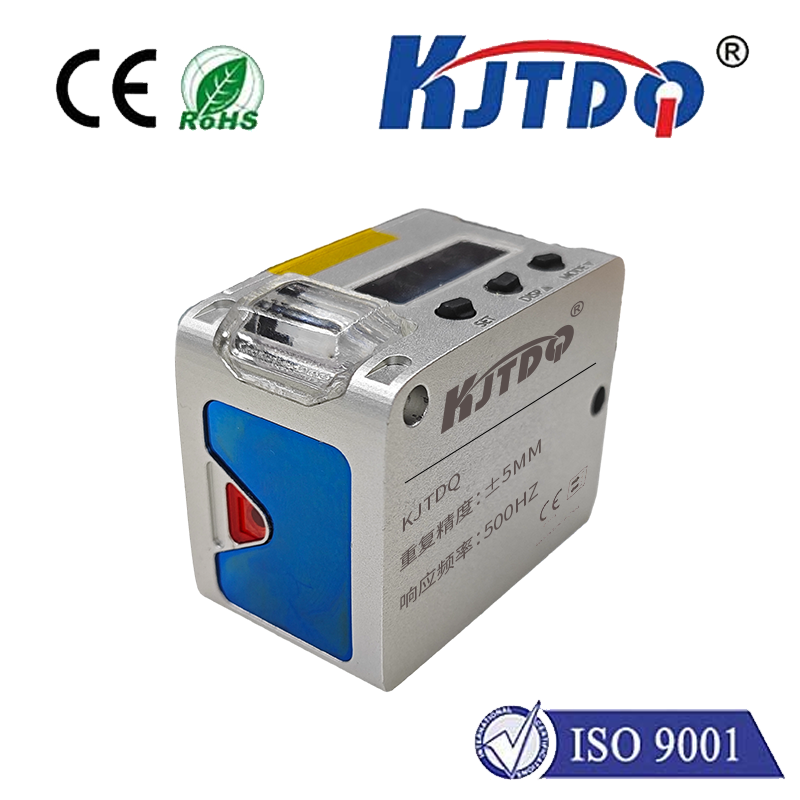
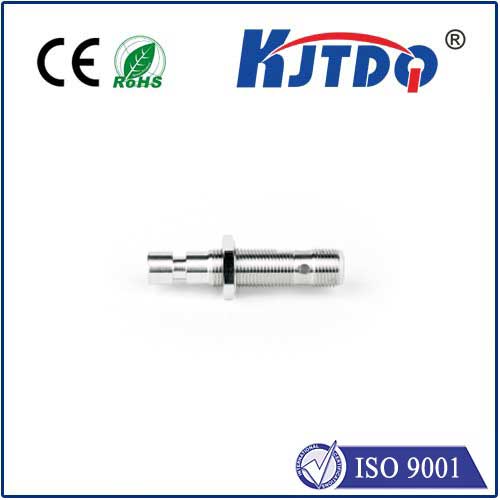
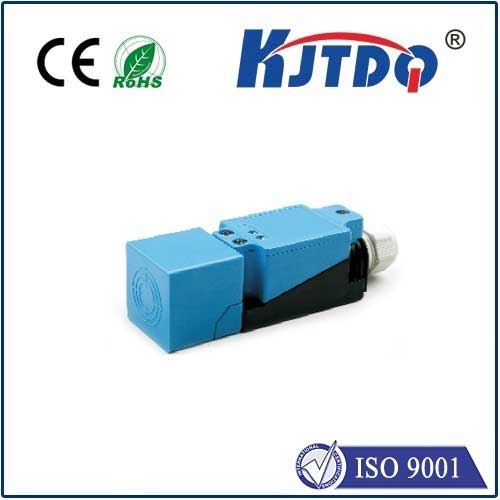
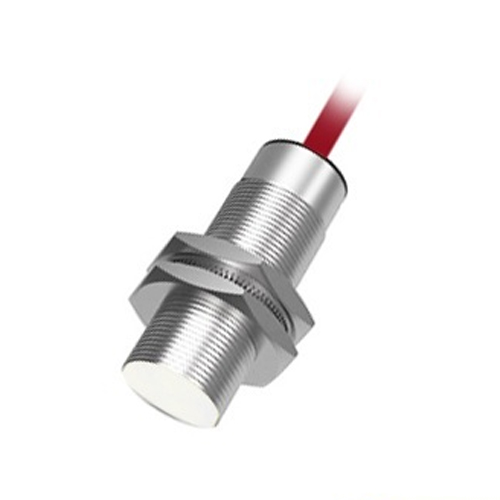
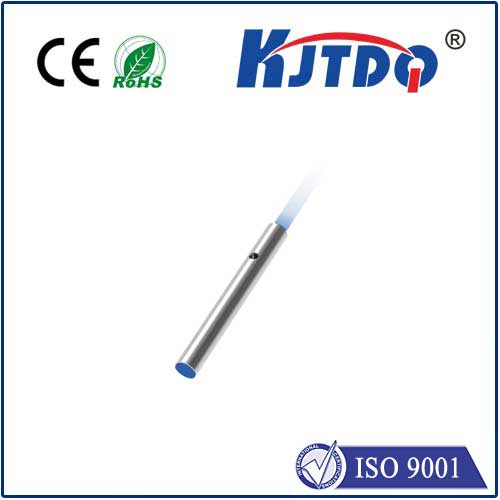
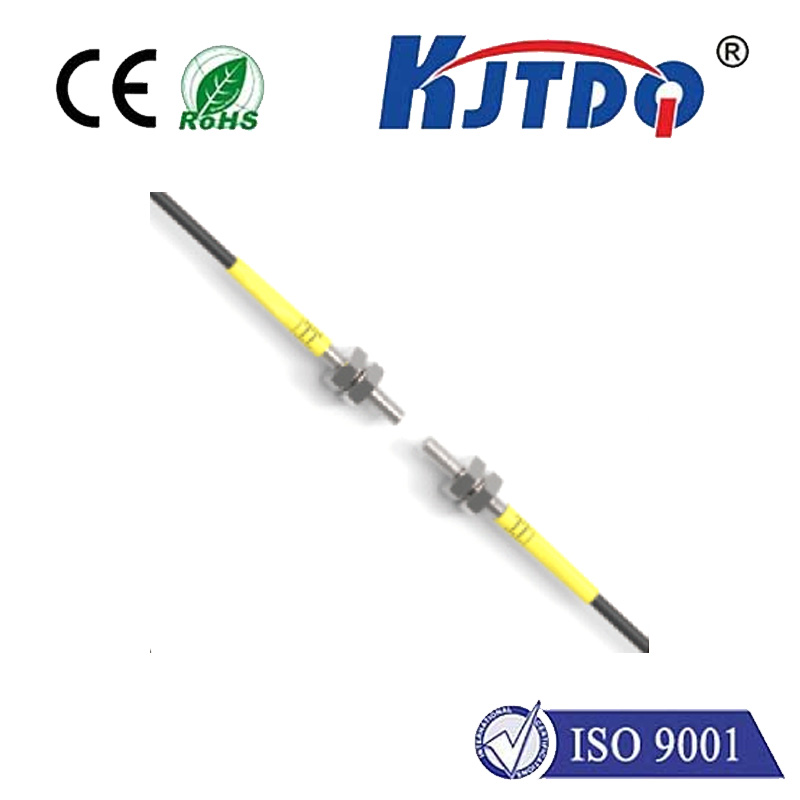
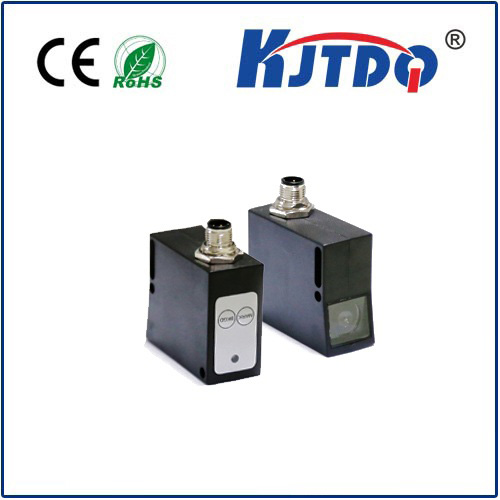
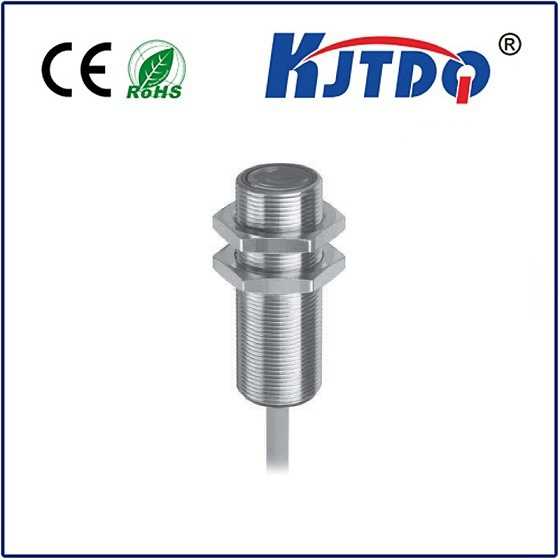
In modern industrial automation, achieving reliable and precise object detection is fundamental to operational efficiency and safety. Among the various sensing technologies available, cylindrical photoelectric sensors have established themselves as a cornerstone due to their versatility and robustness. The KJTDQ series of cylindrical photoelectric sensors exemplifies this technology, offering engineers and system integrators a dependable solution for a wide array of applications, from packaging and material handling to assembly and logistics.
The core principle behind a photoelectric sensor involves emitting a light beam—typically infrared, visible red, or laser—and detecting changes in the received light. Cylindrical models, characterized by their compact, tubular housing, are designed for easy installation in standard mounting brackets. The KJTDQ sensors utilize advanced optical components to generate a stable beam, ensuring consistent performance even in challenging environments with dust, moisture, or varying ambient light conditions. Their design often incorporates features like background suppression or through-beam modes, allowing for precise detection regardless of the target object's color, material, or surface finish.
One of the primary advantages of the KJTDQ cylindrical photoelectric sensor is its exceptional durability. Housed in a sturdy metal or high-grade polymer body, these sensors are built to withstand mechanical shocks, vibrations, and exposure to coolants or oils commonly found on factory floors. This resilience translates directly into reduced downtime and lower maintenance costs, as the sensors continue to operate reliably over extended periods without frequent calibration or replacement. The ingress protection ratings, such as IP67, ensure functionality in damp or washdown environments, making them suitable for food processing or pharmaceutical industries.
Furthermore, the installation and setup process for these sensors is remarkably straightforward. The cylindrical form factor allows for quick mounting, and many models in the KJTDQ range come with intuitive alignment indicators or teach-in functions. This user-friendly design minimizes commissioning time and reduces the potential for human error. Whether configured for diffuse, retro-reflective, or through-beam sensing, the output signals integrate seamlessly with programmable logic controllers (PLCs) and other industrial control systems, providing real-time data for process monitoring and control loops.
Application scenarios for the KJTDQ sensor are vast. In conveyor systems, they accurately detect the presence, position, or count of products, triggering subsequent actions like sorting, diverting, or packaging. In automated machinery, they serve as safety interlocks or position verification switches, ensuring components are correctly aligned before a process cycle begins. Their precision is also invaluable in robotics for part positioning and in assembly lines for verifying component placement. The ability to detect small or transparent objects, which might challenge other sensor types, is another key strength, expanding their utility in electronics manufacturing.
Selecting the right photoelectric sensor requires careful consideration of factors like sensing range, response time, and output type. The KJTDQ series addresses this by offering a comprehensive portfolio with varied specifications. Models with longer sensing ranges are available for larger-scale applications, while high-speed versions cater to fast-moving production lines. Output options typically include both NPN and PNP transistor configurations, as well as analog or IO-Link versions for smarter, data-rich connectivity in Industry 4.0 setups.
In conclusion, the integration of high-quality cylindrical photoelectric sensors like the KJTDQ series is a strategic investment for any operation seeking to enhance automation precision and reliability. By providing consistent, accurate detection across diverse conditions, they form a critical link in the chain of automated processes, directly contributing to improved productivity, quality control, and operational safety. As industries continue to evolve towards greater connectivity and intelligence, the foundational role of such robust and versatile sensing components becomes ever more apparent.