Проверка
Проверка
Проверка
Проверка
Проверка
Проверка
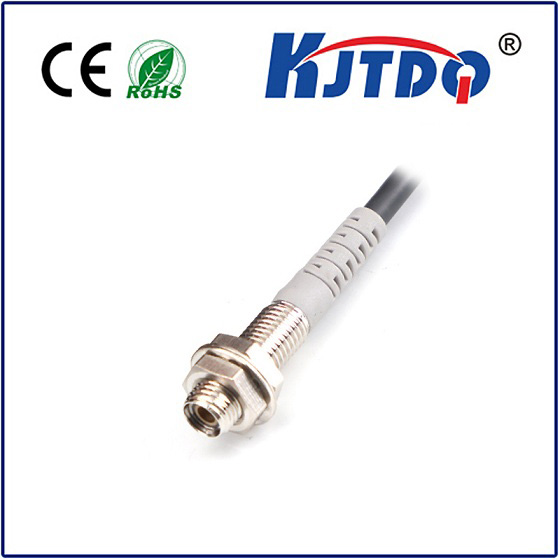
In the realm of industrial automation, the quest for reliable and precise detection is paramount. Among the various sensing technologies available, the analog photoelectric sensor stands out as a versatile and critical component. Unlike its digital counterpart that provides a simple on/off signal, an analog photoelectric sensor offers a continuous output signal proportional to the detected light intensity. This capability opens a wide array of applications where measurement, grading, and nuanced control are required, far beyond mere presence detection.
The fundamental principle of an analog photoelectric sensor involves emitting a beam of light, typically from an LED, towards a target. The sensor's receiver then measures the amount of light that is either reflected back (in diffuse or retro-reflective models) or that reaches it after passing through an object (in through-beam models). The key differentiator is the output. Instead of triggering at a fixed threshold, the sensor generates a continuous current or voltage signal—commonly 0-10V or 4-20mA—that varies linearly with the intensity of the received light. This analog signal provides a rich data stream about the target's characteristics.
This continuous data output is where the true power of the analog photoelectric sensor lies. Consider a bottling plant where bottles need to be filled to an exact level. A digital sensor can confirm a bottle is present, but an analog sensor can measure the liquid level by detecting the change in light transmission through the bottle. As the liquid rises, it scatters more light, causing a gradual change in the sensor's output signal. This signal is fed to a controller which can precisely stop the filling valve at the correct moment, ensuring consistency and reducing waste.
Another significant application is in transparency or haze detection for quality control in plastic film or glass production. By analyzing the precise amount of light transmitted, an analog sensor can detect minute variations in material clarity that a binary sensor would miss. Similarly, in web guiding systems for paper, textile, or metal foil, these sensors can detect the exact edge position by monitoring the transition from material to background, providing feedback for real-time alignment correction.
The advantages of integrating analog photoelectric sensors into a system are substantial. They enable non-contact measurement, which is ideal for delicate, hot, or fast-moving objects. Their response is highly accurate and repeatable, supporting stringent quality standards. Furthermore, by providing a range of data, they allow for more sophisticated process monitoring and control, facilitating predictive maintenance and data-driven optimization. A single analog sensor can often replace multiple limit switches or digital sensors, simplifying system architecture.
When selecting an analog photoelectric sensor, several factors must be evaluated. The sensing range, the type of light source (red, infrared, laser for precision), and the required output signal format are primary considerations. Environmental conditions are crucial; sensors may need specialized housings to withstand dust, moisture, washdowns, or extreme temperatures. The response time must be fast enough for high-speed production lines. Modern sensors often come with teach-in functions or programmable settings via IO-Link, allowing for easy calibration and adaptation to different tasks without manual potentiometer adjustment.
In conclusion, the analog photoelectric sensor is an indispensable tool for advancing beyond basic automation. Its ability to deliver continuous, proportional feedback transforms simple detection into precise measurement and nuanced control. From ensuring fill levels and checking material quality to guiding webs and sorting objects by reflectivity, the KJTDQ series and similar analog photoelectric sensors provide the granular data necessary for smarter, more efficient, and highly precise industrial operations. As factories move towards greater connectivity and Industry 4.0, the role of such intelligent sensing devices will only become more central to achieving operational excellence.