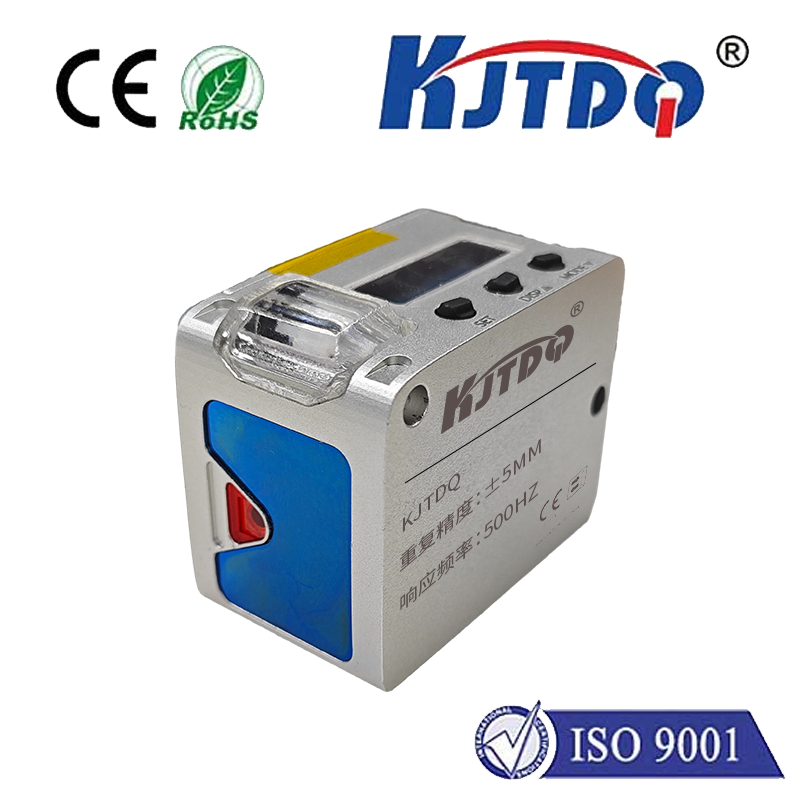
In today's fast-paced industrial landscape, precision, reliability, and adaptability are not just advantages—they are necessities. Enter the hot-sale KJTDQ photoelectric distance-settable sensor, a technological marvel that is rapidly becoming the cornerstone of modern automation systems. This device represents a significant leap forward from traditional fixed-distance sensors, offering unparalleled flexibility and control directly on the factory floor.
The core innovation of the KJTDQ sensor lies in its user-configurable sensing range. Unlike conventional photoelectric sensors with a preset operating distance, this model allows technicians and engineers to set the precise detection distance to match specific application requirements. This is typically achieved through intuitive push-button programming or via a connected software interface. Imagine a packaging line that handles boxes of varying sizes. With a standard sensor, you might need multiple units or complex mechanical adjustments. With the KJTDQ distance-settable sensor, a single unit can be quickly reprogrammed for different box heights, minimizing downtime and maximizing production agility. This feature drastically reduces inventory needs for multiple sensor types and simplifies system design and maintenance.
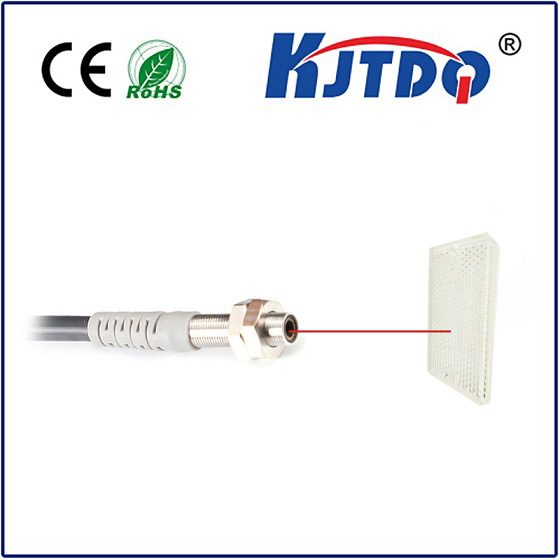
The operational principle remains rooted in reliable photoelectric technology. The sensor emits a beam of light—often infrared or laser—towards a target. The reflected light is then captured by the receiver. The built-in microprocessor analyzes the signal and, based on the user-defined distance parameters, provides a crisp, clean output signal. This "teachable" functionality means the sensor can be deployed in applications with inconsistent target positions or where process changes are frequent. Common applications include precise object counting on high-speed conveyors, edge detection in web guiding systems, wafer positioning in semiconductor manufacturing, and ensuring proper fill levels in bottling plants. Its ability to ignore background objects beyond the set range enhances its reliability in cluttered environments.
Durability is a non-negotiable trait for industrial components, and the KJTDQ sensor is engineered to excel. Housed in a robust, often IP67-rated enclosure, it withstands exposure to dust, moisture, oil mist, and mechanical vibrations. This rugged construction ensures consistent performance in harsh conditions, from automotive assembly plants to food and beverage processing facilities. The long operational life and reduced failure rates translate directly into lower total cost of ownership and higher overall equipment effectiveness (OEE).
Integration into existing control ecosystems is seamless. The sensor typically provides standard output options such as NPN, PNP, or analog (4-20mA / 0-10V), making it compatible with virtually all Programmable Logic Controllers (PLCs) and industrial networks. This plug-and-play capability accelerates deployment and reduces integration headaches. For advanced users, features like programmable switching hysteresis and time delays further fine-tune the sensor's behavior for complex tasks.
The market response has been overwhelmingly positive, cementing its status as a "hot-sale" item. Facilities managers praise its versatility, which simplifies training and standardizes spare parts. System integrators value the design freedom it offers, allowing for more elegant and cost-effective solutions. The ultimate benefit is enhanced productivity: fewer line stoppages, less product waste, and a more responsive manufacturing process.
In conclusion, the KJTDQ photoelectric distance-settable sensor is more than just a component; it is a strategic tool for building resilient and efficient automation. By putting precise distance control directly in the hands of operators, it eliminates traditional constraints and opens new possibilities for optimization. As industries worldwide push towards smarter, more flexible manufacturing—Industry 4.0 and beyond—the adoption of intelligent, configurable devices like this sensor is not merely a trend but a fundamental step forward. Investing in such technology is an investment in future-proofing your operations, ensuring you remain competitive in an era where adaptability is key.