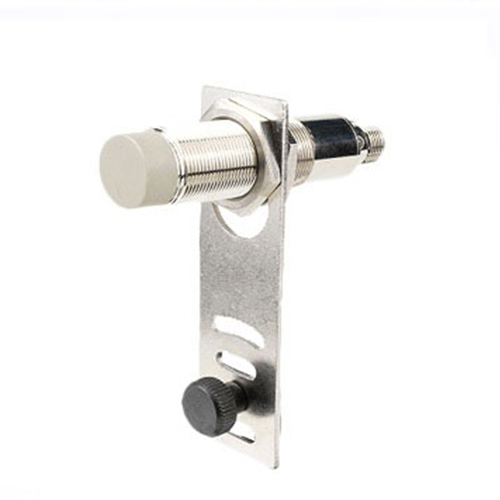
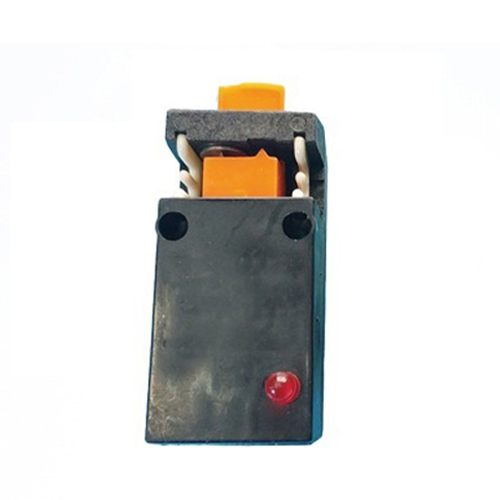
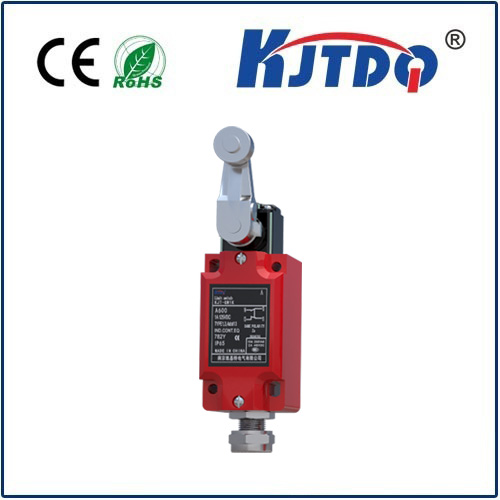
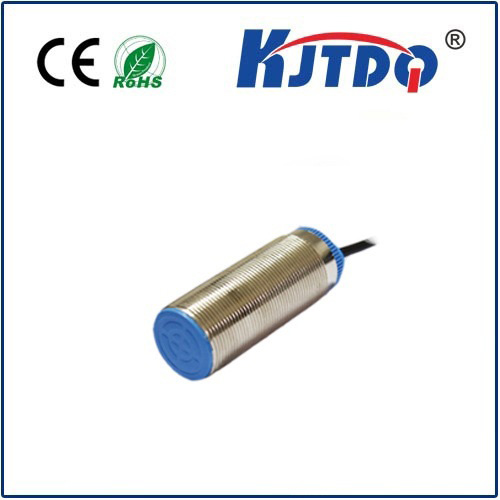
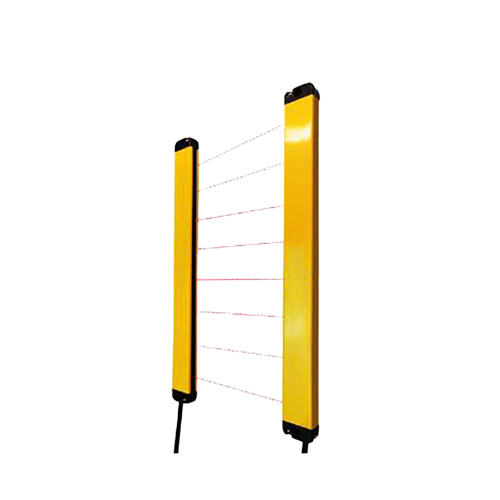
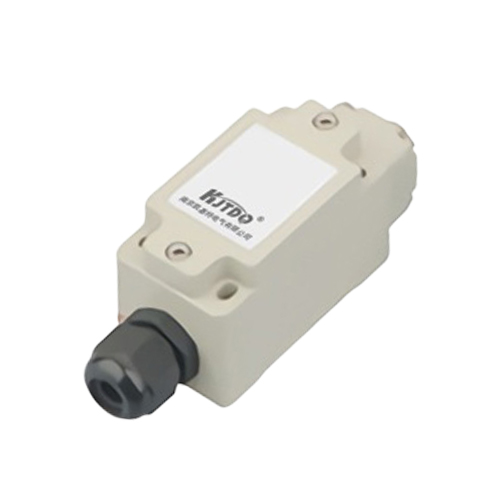
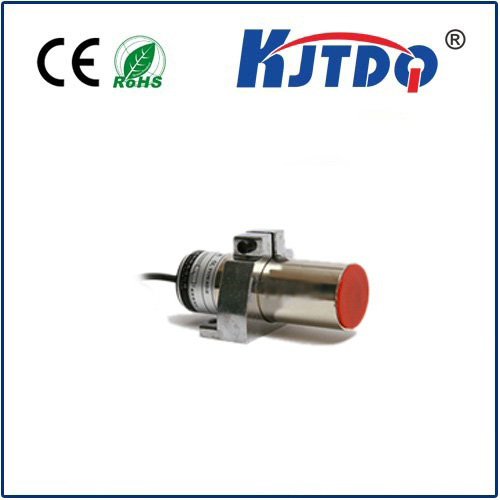
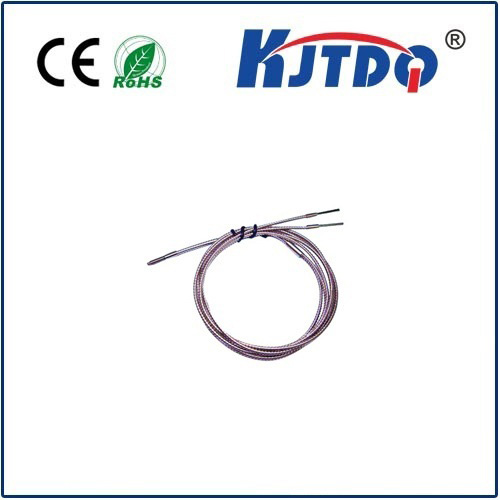
In the rapidly evolving landscape of industrial automation and smart systems, the demand for reliable, non-contact sensing solutions is at an all-time high. Among the frontrunners meeting this demand is the diffuse photoelectric sensor utilizing infrared light. This technology, often abbreviated with identifiers like KJTDQ in specific product lines, represents a cornerstone of modern detection systems. Unlike through-beam or retro-reflective sensors, the diffuse photoelectric sensor operates on a simple yet ingenious principle: it contains both an infrared light emitter and a receiver in a single housing. The emitter projects a beam of infrared light towards the target object. When this beam strikes the object, a portion of the light is diffusely reflected back to the receiver within the sensor. The sensor's internal circuitry then detects this returning light, triggering a switching signal.
The core advantage of using infrared light in this diffuse mode is its exceptional performance in diverse environments. Infrared beams are less susceptible to interference from ambient visible light, making these sensors highly stable in settings with fluctuating lighting conditions, such as warehouses with skylights or outdoor applications at dusk. The KJTDQ series and similar sensors are engineered for this robustness. They can reliably detect a vast array of objects—from opaque materials like metal, plastic, and wood to certain translucent items—without any physical contact. This eliminates wear and tear, reduces maintenance costs, and prevents product damage, which is crucial in packaging, material handling, and assembly lines.
A key technical aspect that defines the effectiveness of a diffuse photoelectric infrared sensor is its sensing range and the concept of background suppression. Standard diffuse sensors have a fixed sensing distance, but advanced models incorporate background suppression technology. This clever feature allows the sensor to ignore objects beyond a preset range by evaluating the angle of the reflected light, not just its intensity. For instance, a KJTDQ sensor with background suppression can be set to detect a product on a conveyor belt while completely ignoring the more distant factory floor or machinery behind it. This precision prevents false triggers and enhances system reliability.
Furthermore, the application versatility of these sensors is remarkable. They are ubiquitous in manufacturing for tasks like counting bottles on a filling line, detecting the presence of a box for taping, or verifying if a component is seated correctly in an assembly jig. In the automotive industry, they monitor the position of robotic arms. In logistics, they ensure parcel chutes are clear. Their compact size, facilitated by the single-housing design of the emitter and receiver, allows for easy integration into tight spaces on machinery.
When selecting a diffuse photoelectric sensor like those in the KJTDQ family, several practical factors must be considered. The sensing distance must be appropriate for the application, with a sufficient margin for object color and surface texture, as dark or matte surfaces reflect less light. The housing material is critical for durability; sensors in washdown environments (e.g., food and beverage) often require stainless steel or high-grade plastic housings with IP67 or IP69K ratings for water and dust resistance. The output type—whether NPN or PNP transistor, or a relay—must match the control system's input requirements. Modern sensors also offer features like adjustable sensitivity via potentiometers or teach-in functions for quick setup, and visible or audible operation indicators for easy diagnostics.
Looking ahead, the integration of IO-Link and other smart communication protocols into diffuse photoelectric sensors is set to redefine their role. A "smart" KJTDQ sensor could not only detect an object but also communicate its health status, operating hours, and environmental conditions to a central controller, enabling predictive maintenance and deeper process analytics. This evolution from a simple switch to an intelligent data point is the next frontier.
In conclusion, the diffuse photoelectric sensor infrared, exemplified by robust product lines such as KJTDQ, is far more than a simple proximity switch. It is a sophisticated, adaptable, and reliable workhorse of industrial automation. Its non-contact operation, environmental resilience, and growing intelligence make it an indispensable component for building efficient, safe, and future-ready automated systems. By understanding its principles and capabilities, engineers and system integrators can unlock new levels of precision and reliability in countless applications.