Проверка
Проверка
Проверка
Проверка
Проверка
Проверка
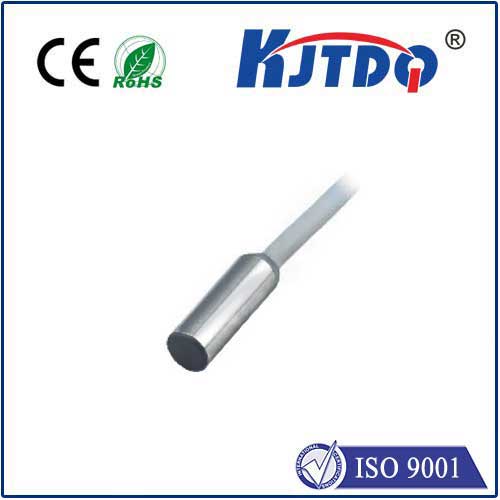
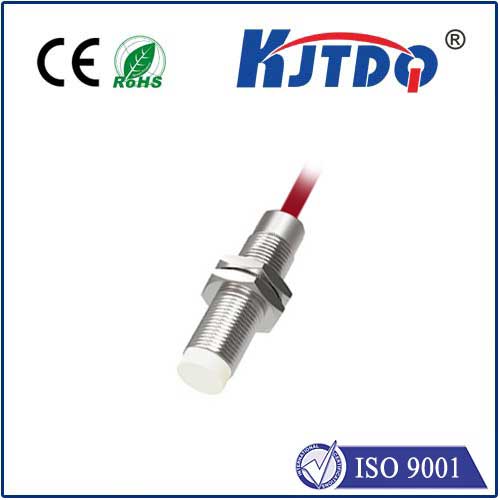
In the world of industrial automation, precision and reliability are non-negotiable. Among the myriad of components that keep production lines humming, the PNP NC proximity sensor stands out as a cornerstone of dependable object detection. This guide delves into the workings, applications, and critical advantages of this specific sensor type, providing a clear understanding of why it's a preferred choice in countless systems.
First, let's demystify the terminology. "PNP" refers to the sensor's output configuration. A PNP sensor, also known as a "sourcing" sensor, switches the positive voltage to the load when an object is detected. Imagine it as a tap that provides power. The "NC" stands for Normally Closed. In its default state without a target present, the NC circuit is closed, allowing current to flow. When a metal object enters its sensing range, the circuit opens, interrupting the signal. This behavior is the inverse of a NO (Normally Open) sensor and is often chosen for safety-critical or fail-safe applications, as a broken wire or loss of power typically mimics the "object detected" state, triggering an alarm or shutdown.
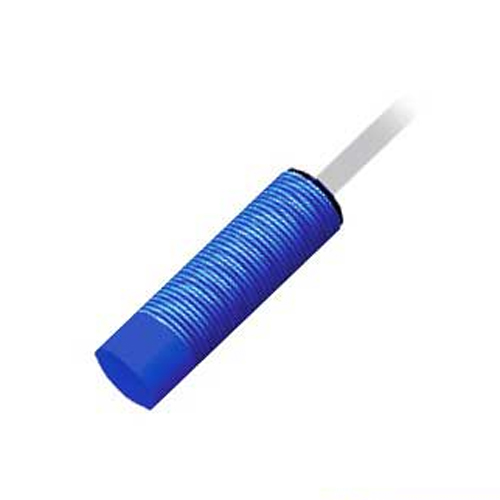
The core technology behind most inductive PNP NC proximity sensors is electromagnetic induction. The sensor's face contains an oscillator circuit that generates a high-frequency electromagnetic field. When a metallic target approaches this field, eddy currents are induced within the metal, causing a load on the oscillator. The sensor's detection circuit monitors this change and triggers the solid-state output switch. For PNP NC types, this action switches off the positive output. These sensors are exceptionally robust, immune to environmental factors like dust, oil, and moisture (given appropriate IP ratings), and offer non-contact operation, eliminating mechanical wear and tear.
The application spectrum for PNP NC proximity sensors is vast. They are indispensable in position verification on assembly lines, ensuring a component is in place before the next machining step. In robotic arms, they provide precise end-of-travel or tool presence confirmation. Their NC configuration makes them ideal for safety interlocks on machine guards; if the guard is opened, the circuit opens (or is interrupted), signaling the machine to stop immediately. They are also widely used in material handling for counting, jam detection, and end-of-travel limits. The choice of PNP output often aligns with the prevalent wiring standards of Programmable Logic Controllers (PLCs) in many regions, particularly Europe and Asia, simplifying integration.
Selecting the right PNP NC sensor involves several considerations. Sensing range, which is typically short for inductive models (a few millimeters to tens of millimeters), must be chosen with a safety margin. The housing material, such as stainless steel or nickel-plated brass, must suit the environment—whether it's resistant to chemicals, weld spatter, or physical impact. The electrical specifications, like operating voltage (commonly 10-30V DC) and output current, must match the control system's requirements. Furthermore, factors like switching frequency (how fast it can detect objects) and temperature range are crucial for high-speed or extreme environment applications.
Installation and wiring are straightforward but require attention to detail. Ensuring the sensor is mounted securely without misalignment is key to consistent performance. For a standard three-wire DC PNP NC sensor, the wires are typically brown (positive), blue (negative), and black (output). The load (e.g., a PLC input) is connected between the black output wire and the blue negative wire. In the normal state (no target), the PNP switch is closed, sourcing current to the load, so the PLC input sees a "high" signal. When a target is detected, the switch opens, stopping the current flow, and the PLC input sees a "low" signal. This inverse logic is fundamental to understanding NC operation.
Compared to other configurations, the PNP NC sensor offers distinct benefits. The fail-safe nature of the NC design enhances system safety. The PNP sourcing output can directly drive many PLC inputs without additional components. Their solid-state design ensures millions of reliable switching cycles. When maintenance is required, diagnostics are simplified: a constant "on" state at the controller might indicate a sensor failure or wiring issue, prompting immediate investigation.
In conclusion, the PNP NC proximity sensor is more than just a component; it is a reliable sentinel in automated systems. Its specific combination of a sourcing output and a normally closed circuit provides a robust solution for safety, control, and detection tasks where reliability is paramount. By understanding its principles and proper application, engineers and technicians can design and maintain systems that are not only efficient but also resilient. For anyone involved in industrial control, mastering the use of this sensor type is a step toward building more dependable and safer automation environments.