Проверка
Проверка
Проверка
Проверка
Проверка
Проверка
In the realm of industrial automation and machine safety, the precise detection of objects is paramount. Among the various technologies employed, the proximity sensor stands out for its reliability and non-contact operation. Specifically, sensors configured with an NPN (Negative-Positive-Negative) transistor output in a Normally Open (NO) switching mode form a critical and widely adopted component in control systems worldwide. Understanding the functionality, wiring, and application scenarios of an NPN NO proximity sensor is essential for engineers, technicians, and system integrators.
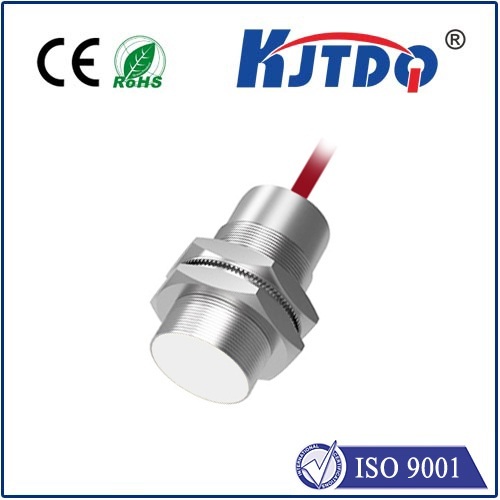
At its core, a proximity sensor detects the presence or absence of a metallic object within its sensing range without physical contact. It operates on the principle of electromagnetic induction or capacitive coupling. The "NPN" designation refers to the type of transistor used in the sensor's output circuit. In an NPN sensor, the output transistor switches the negative or ground side of the load. When the sensor is inactive (no target detected), the output transistor is off, and the output signal line is effectively disconnected from the internal ground. Upon detecting a target, the transistor turns on, connecting the output signal line to ground, thus completing the circuit for the connected load, such as a PLC (Programmable Logic Controller) input or a relay coil.
The "NO" or Normally Open terminology describes the default state of the sensor's switching contact. A Normally Open configuration means that when the sensor is in its idle state (no target present), the electrical circuit is open, and no current flows. When a target enters the sensing field, the switch closes, allowing current to flow. This is analogous to a push-button switch that is off until pressed. The combination NPN NO is particularly common in many global markets, especially where PLCs are designed to sink current (where the common terminal of the input module is connected to a positive voltage).
Wiring an NPN NO proximity sensor typically involves three wires: Brown (or Red) for the positive supply voltage (often 10-30V DC), Blue for the negative or ground (0V), and Black for the output signal. The load (e.g., the PLC input) is connected between the positive supply and the Black output wire. When the sensor activates, the Black wire is pulled to ground (0V) through the internal NPN transistor, creating a voltage difference across the load and causing current to flow from positive, through the load, into the sensor's output, and to ground. This current flow is detected as an "ON" signal by the control system.
The advantages of using an NPN NO proximity sensor are significant. They offer high switching speeds, excellent repeatability, and long operational life due to the absence of mechanical contacts. The solid-state NPN output is robust against vibration and contamination. In safety and control circuits, the NO configuration can be intuitively understood: detection equals circuit closure, which often aligns with initiating an action like starting a process or triggering a safety interlock. These sensors are ubiquitous in applications such as conveyor belt object counting, robotic arm position verification, machine tooling limit detection, and automated packaging systems.
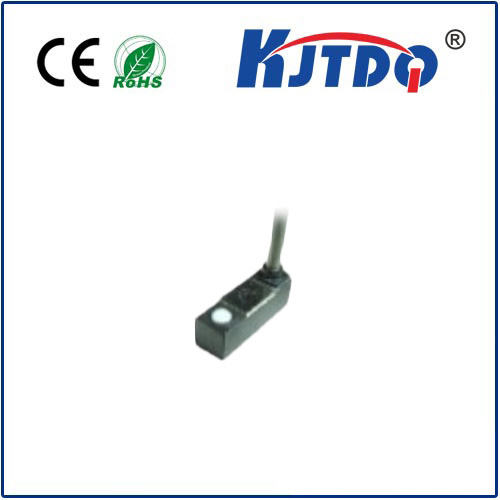
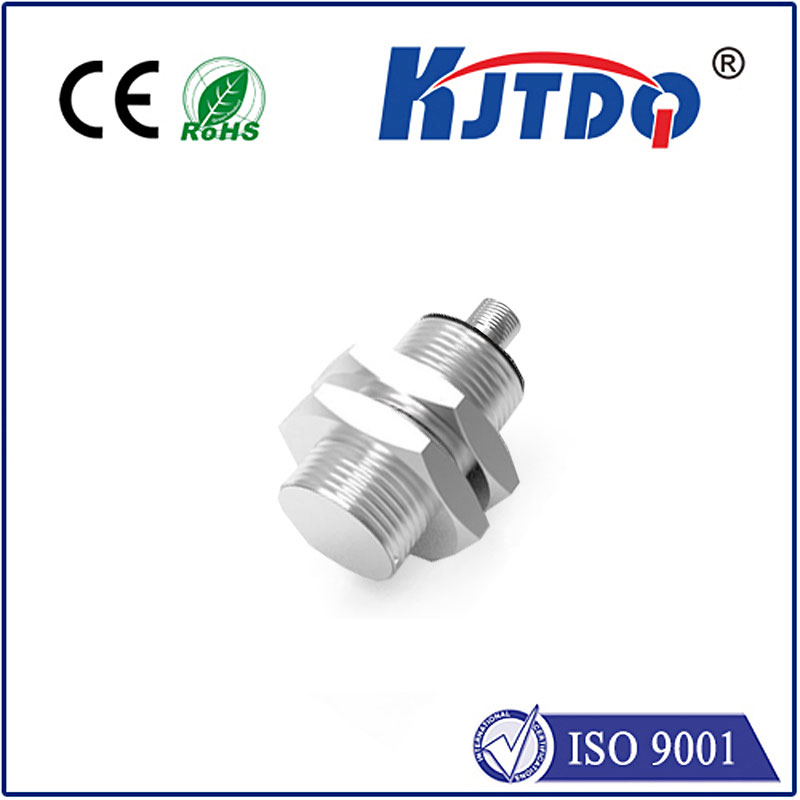
When selecting and installing an NPN NO proximity sensor, several factors must be considered. The sensing distance, target material (typically ferrous or non-ferrous metals), environmental conditions (like temperature, humidity, and potential washdown needs), and housing style (cylindrical, rectangular, etc.) are all crucial. Proper shielding and grounding are essential to prevent electrical noise interference, which could cause false triggering. It is also vital to ensure the sensor's voltage and current ratings are compatible with the power supply and the load to prevent damage.
In conclusion, the NPN NO proximity sensor is a fundamental building block in modern industrial electronics. Its design offers a reliable and straightforward method for converting physical presence into a clear electrical signal for digital control systems. By mastering its operation and integration principles, professionals can design more efficient, safe, and responsive automated systems, ensuring seamless operation in manufacturing plants, automotive assembly lines, and beyond. As technology evolves, these sensors continue to be refined, but the core logic of the NPN NO configuration remains a staple in automation engineering.