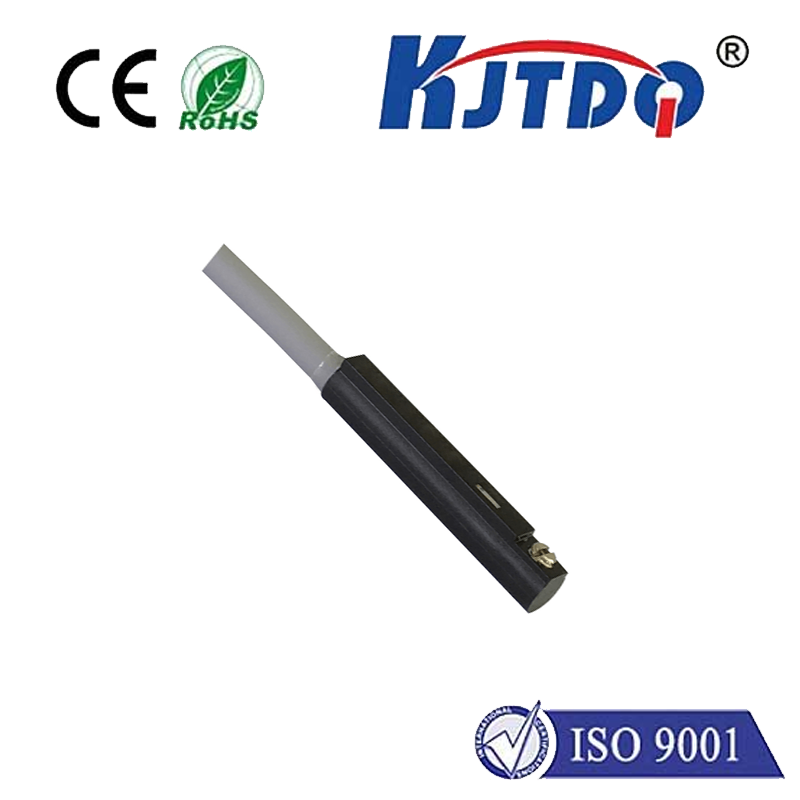
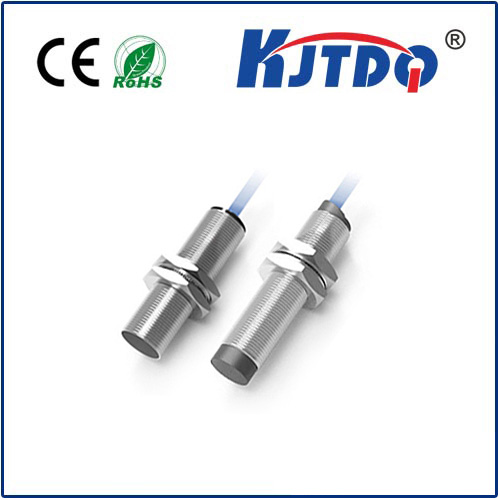
In the rapidly evolving landscape of industrial automation, the demand for reliable, non-contact sensing solutions has never been greater. Enter the KTJ Hall Proximity Sensor, a technological marvel engineered to deliver unparalleled precision and durability in the most demanding environments. This device represents a significant leap forward in detection technology, leveraging the Hall effect to sense the presence of ferromagnetic objects without any physical contact.
The core principle behind the KTJ sensor is the Hall effect, a phenomenon where a voltage difference is generated across an electrical conductor when a magnetic field is applied perpendicular to the current flow. The KTJ Hall Proximity Sensor incorporates a sophisticated integrated circuit that precisely measures changes in the magnetic field caused by the approach of a target object, typically a magnet or a ferrous metal. This allows for detection with exceptional accuracy and repeatability, making it an indispensable component in modern manufacturing, robotics, and process control systems.
One of the most compelling advantages of the KTJ Hall Proximity Sensor is its robustness. Unlike optical or capacitive sensors, it is virtually immune to environmental contaminants such as dust, oil, coolant, and moisture. This inherent resilience ensures stable operation in harsh industrial settings like automotive assembly lines, metalworking shops, and food processing plants, where other sensor types might fail. Its solid-state construction, with no moving parts, translates to a long operational lifespan and minimal maintenance requirements, significantly reducing total cost of ownership.
The application versatility of the KTJ sensor is vast. It is commonly deployed for precise position sensing, such as determining the open or closed state of valves and cylinders, monitoring rotational speed and direction of gears or shafts, and providing end-of-travel detection for linear actuators. In conveyor systems, these sensors reliably count products or detect their presence for sorting and packaging. The automotive industry relies on them for critical functions like gearbox position sensing and brake pedal position detection, where failure is not an option.
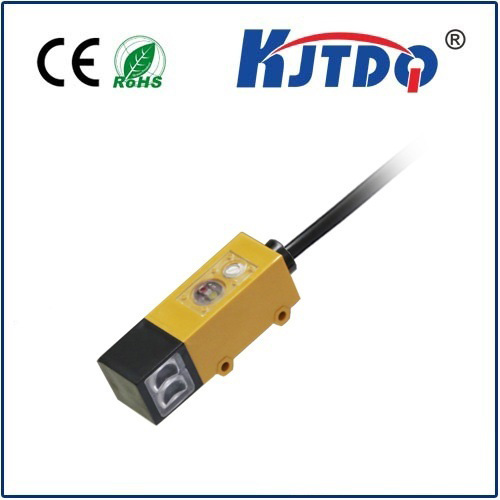
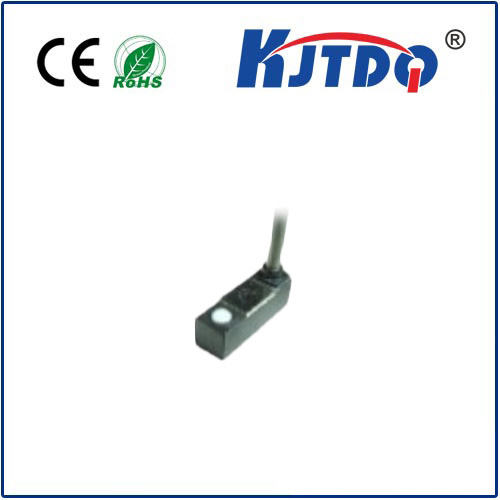
Installation and integration are straightforward. The KTJ Hall Proximity Sensor is designed for easy mounting and typically features standard output signals, such as NPN or PNP transistor switching, which are compatible with most Programmable Logic Controllers (PLCs) and industrial control systems. Many models offer various housing styles, including tubular and rectangular forms, with different sensing ranges and connection options to fit specific application needs. Engineers appreciate the sensor's consistent performance across a wide temperature range and its immunity to electrical noise, ensuring signal integrity in electrically noisy industrial environments.
When selecting a proximity sensor, the choice between Hall effect, inductive, and capacitive technologies is crucial. The KTJ Hall Proximity Sensor stands out for its specific ability to detect magnetic fields. This makes it the superior choice for applications involving permanent magnets or where only magnetic targets are present. Its precision in detecting the exact position of a magnet is a key differentiator. For instance, in brushless DC motors, Hall sensors are essential for commutating the motor windings at the correct moment.
Looking ahead, the integration of smart features and Industrial Internet of Things (IIoT) connectivity is the next frontier. Future iterations of sensors like the KTJ may include embedded diagnostics, predictive maintenance alerts, and direct data communication to cloud platforms, further enhancing operational efficiency and enabling proactive system management.
In conclusion, the KTJ Hall Proximity Sensor is more than just a component; it is a foundational element for building smarter, more reliable, and more efficient automated systems. Its combination of contactless operation, environmental toughness, and precise magnetic field detection solves complex engineering challenges across countless industries. For design engineers and plant managers seeking to optimize performance and ensure uninterrupted production, specifying the KTJ Hall Proximity Sensor is a decision grounded in proven technology and tangible results, paving the way for the next generation of industrial innovation.