Проверка
Проверка

Проверка
Проверка
Проверка
Проверка
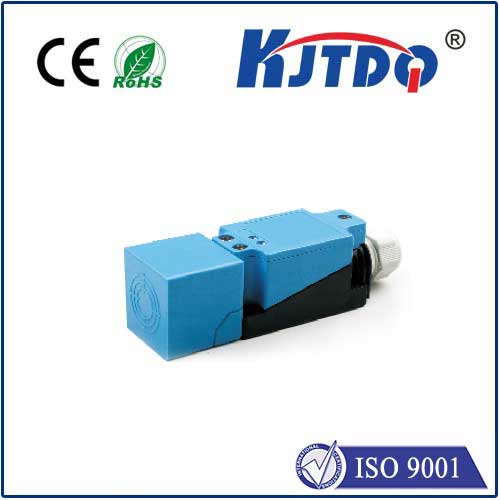
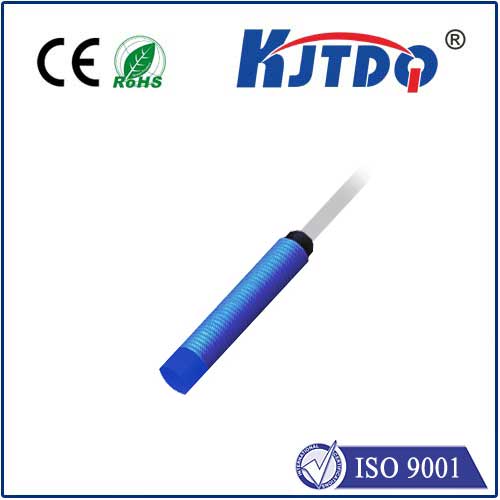
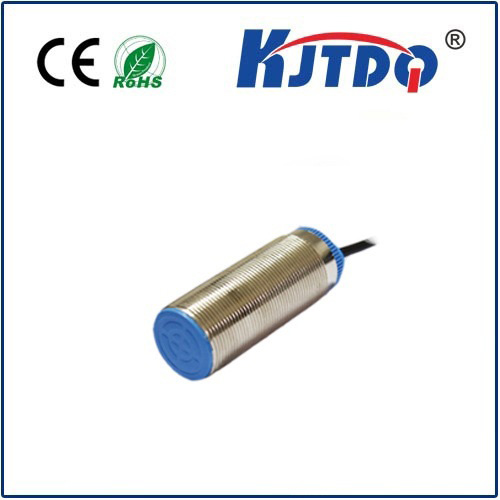
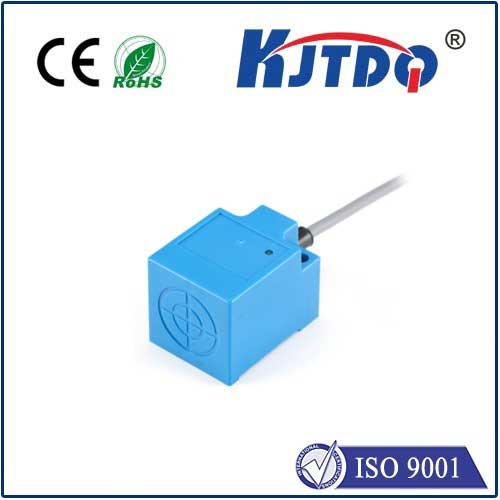
In the world of industrial automation, efficiency, reliability, and cost are paramount. For detecting the presence or absence of metallic objects without physical contact, the 2 wire inductive proximity sensor stands as a fundamental and widely adopted component. Unlike its 3-wire or 4-wire counterparts, the 2-wire version offers a simplified design that integrates directly into the control circuit, often making it the go-to choice for straightforward applications. Its principle of operation is elegantly simple: an oscillator circuit generates a high-frequency electromagnetic field from the sensor's face. When a ferrous or non-ferrous metal target enters this field, eddy currents are induced on the target's surface. These currents absorb energy from the oscillator, causing its amplitude to decrease. This change is detected by the sensor's evaluation circuit, which then triggers a switching action.
The primary advantage of the 2 wire inductive proximity sensor lies in its wiring simplicity and installation ease. It connects similarly to a standard mechanical switch, requiring only a power supply line and a load (like a PLC input, relay, or indicator lamp) in series. This reduces wiring time, minimizes potential connection errors, and lowers overall system complexity. For panel builders and maintenance technicians, this simplicity translates directly into reduced labor costs and faster commissioning. Furthermore, the absence of a separate output wire often makes these sensors more compact and suitable for space-constrained environments.
Cost-effectiveness is another compelling benefit. By eliminating one or two wires and the associated internal circuitry for separate output switching, 2-wire sensors are generally more economical to manufacture and purchase. This makes them an ideal solution for high-volume applications or projects with tight budgets, without significantly compromising on core detection functionality. They are perfectly suited for tasks such as counting metal parts on a conveyor, verifying the position of a machine component, or acting as an end-of-travel limit switch.
However, selecting a 2-wire sensor requires careful consideration of a few key parameters to ensure optimal performance. The load current must be within the sensor's specified operating range. If the current draw of the connected device is too low, the sensor may not switch off completely, leading to a residual current or "leakage." Conversely, exceeding the maximum current can damage the device. Voltage drop is another factor; since the sensor and load are in series, the voltage across the load will be slightly less than the supply voltage. Engineers must verify that the connected equipment can operate reliably at this slightly reduced voltage. Lastly, while modern 2-wire sensors offer impressive switching frequencies and sensing ranges, they might not match the ultimate performance specs of some advanced 3-wire models in high-speed or long-range applications.
When integrating a 2 wire inductive proximity sensor, proper installation is crucial for reliable operation. The sensor should be mounted securely to avoid vibration-induced false triggers. It is also essential to consider the sensing distance, which can be affected by the target material's type, size, and shape. For instance, steel is detected at the rated sensing distance, while aluminum or copper may reduce the effective range. Environmental factors like temperature extremes, moisture, and the presence of cutting fluids or metal chips should also be accounted for by choosing sensors with appropriate ingress protection (IP) ratings.
Modern advancements have significantly enhanced the capabilities of 2-wire inductive sensors. Many now feature short-circuit and overload protection, reverse polarity protection, and improved noise immunity, making them robust enough for harsh industrial environments. Some models also incorporate LED status indicators for easy diagnostics, helping maintenance personnel quickly identify operational status. These improvements have expanded their usability beyond simple on/off tasks into more critical control loops.
In conclusion, the 2 wire inductive proximity sensor remains a cornerstone of industrial sensing due to its unbeatable combination of simplicity, reliability, and affordability. For applications requiring dependable detection of metallic objects where wiring minimization and cost control are priorities, it presents an optimal engineering solution. By understanding its operating principles, advantages, and selection criteria, system designers and plant engineers can effectively leverage this versatile technology to build more efficient and cost-effective automation systems. Its continued evolution ensures it will remain a vital tool in the automation engineer's toolkit for years to come.