Проверка
Проверка
Проверка
Проверка
Проверка
Проверка
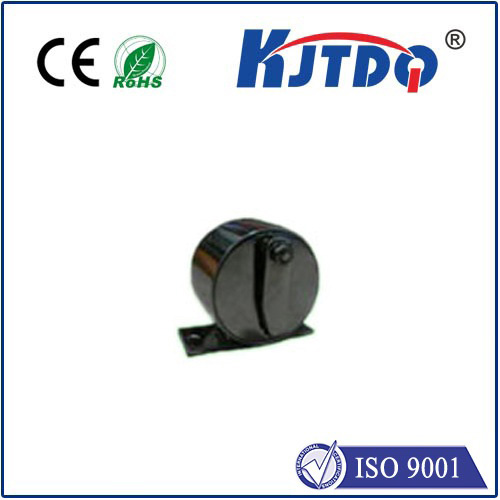
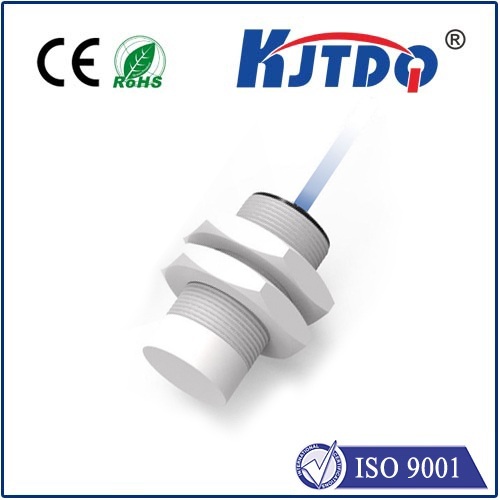
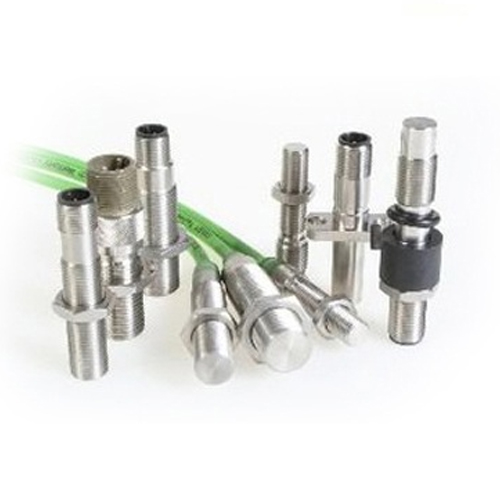
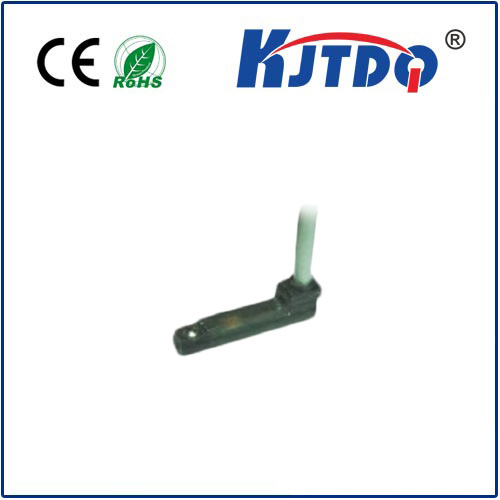
In the rapidly evolving landscape of industrial automation, the demand for components that offer unwavering precision, durability, and reliability is paramount. Among these critical components, micro switch proximity sensors stand out as fundamental elements that bridge the gap between mechanical action and electronic control. These devices are engineered to detect the presence or absence of an object without any physical contact, relying instead on magnetic, inductive, or capacitive fields. This non-contact operation is their defining characteristic, eliminating mechanical wear and tear and ensuring a significantly longer operational lifespan compared to traditional limit switches.
The core principle behind a micro switch proximity sensor involves a sensitive reed switch or a solid-state switching element housed within a compact, robust casing. When a target object, often a metal actuator or a magnet, enters the sensor's predefined detection range, it disrupts or alters the sensor's electromagnetic field. This change triggers the internal micro switch to change state—either opening or closing an electrical circuit. This instantaneous and precise signal is then relayed to a programmable logic controller (PLC) or other control systems, initiating a programmed sequence such as stopping a conveyor belt, counting items, confirming a robotic arm's position, or activating a safety mechanism.
The applications for these sensors are vast and integral to numerous industries. In automotive manufacturing, they are indispensable for verifying part placement in assembly lines and ensuring precise positioning in robotic welding cells. Within the packaging industry, they provide accurate product counting and jam detection on high-speed filling and sealing machines. Elevator systems utilize them for floor-level positioning and door safety, while household appliances like washing machines and microwave ovens rely on them for door interlock safety features. Their sealed designs often allow them to perform reliably in harsh environments with exposure to dust, moisture, oils, and vibrations, making them suitable for food processing, pharmaceutical production, and outdoor machinery.
Selecting the right micro switch proximity sensor requires careful consideration of several technical parameters. The sensing range, typically a few millimeters, must be appropriate for the application to avoid false triggers. The output type is crucial; some sensors provide a simple digital on/off signal (PNP or NMP transistor outputs), while others may offer analog or IO-Link capabilities for more advanced data communication. The housing material, often stainless steel or rugged plastics like PBT, must withstand the environmental conditions. Furthermore, factors like switching frequency, voltage rating, and connection type (pre-wired cable or quick-disconnect) play a vital role in seamless integration into existing control panels and machinery.
The advantages of implementing micro switch proximity sensors are compelling. Their non-contact nature ensures millions of reliable switching cycles with minimal maintenance. They offer high repeat accuracy, meaning they consistently detect an object at the exact same position every time, which is critical for quality control. Their fast response time allows them to keep pace with modern high-speed automation. Moreover, their compact size enables installation in space-constrained locations where larger sensors would not fit. By providing a critical feedback loop, these sensors enhance overall system safety, prevent equipment damage, and optimize production efficiency, directly contributing to reduced downtime and operational costs.
As Industry 4.0 and smart factory concepts continue to mature, the role of sensors like these becomes even more central. The integration of micro switch proximity sensors with Industrial Internet of Things (IIoT) platforms allows for predictive maintenance, where data on switching cycles can predict failure before it occurs. Future iterations may see enhanced diagnostics, lower power consumption, and even smaller form factors without compromising performance. For engineers and system integrators, understanding the capabilities and specifications of these sensors is key to designing resilient, efficient, and intelligent automated systems. Their silent, continuous operation may go unnoticed, but they are truly the unsung heroes ensuring the smooth and precise flow of modern industrial processes.