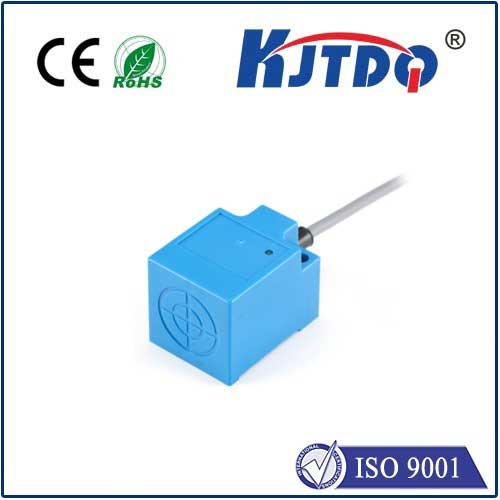
In modern industrial automation, the demand for reliable and precise detection solutions continues to grow. Among the various technologies available, the long range inductive proximity sensor stands out as a critical component for enhancing operational efficiency and safety. These sensors are designed to detect metallic objects without physical contact, offering durability and consistency in harsh environments.
The working principle of an inductive proximity sensor is based on electromagnetic induction. It generates an oscillating electromagnetic field from its sensing face. When a metallic object enters this field, eddy currents are induced in the target, causing a change in the oscillation amplitude. This change is detected by the sensor's circuitry, triggering an output signal. Long range variants extend this detection capability to greater distances, typically from a few millimeters up to several centimeters, depending on the sensor size and target material. This extended range allows for flexible installation and early detection in applications such as conveyor systems, robotic arms, and material handling equipment.
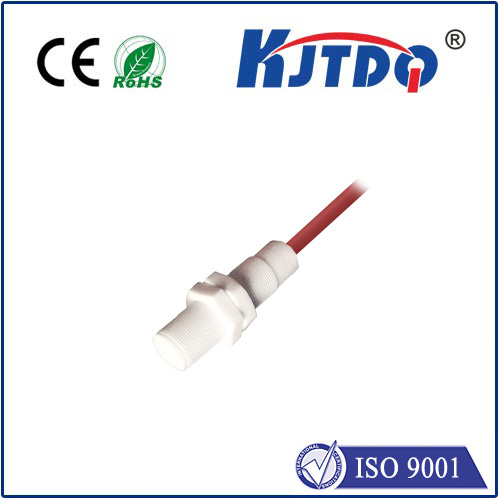
One of the key advantages of long range inductive proximity sensors is their robustness. They are often housed in stainless steel or nickel-plated brass casings, providing resistance to dust, moisture, vibrations, and temperature fluctuations. This makes them suitable for use in manufacturing plants, automotive assembly lines, and mining operations where conditions can be demanding. Unlike optical or capacitive sensors, inductive sensors are unaffected by color, transparency, or non-metallic contaminants, ensuring stable performance when detecting metals like steel, aluminum, or copper.
Applications of these sensors are diverse. In automotive industries, they monitor the position of components on production lines, ensuring precise assembly. In packaging machinery, they detect the presence of metal lids or caps, facilitating automated sealing processes. Additionally, in logistics and warehousing, long range sensors help in tracking metallic pallets or containers, improving inventory management and reducing manual intervention. The ability to sense objects from a distance also enhances safety by allowing machinery to stop or slow down before collisions occur, protecting both equipment and personnel.
When selecting a long range inductive proximity sensor, factors such as sensing distance, target material, output type (e.g., NPN or PNP), and environmental ratings should be considered. Modern sensors often feature advanced diagnostics, such as short-circuit protection and LED indicators, for easier maintenance and troubleshooting. Integration with programmable logic controllers (PLCs) and industrial networks further streamlines automation processes, enabling real-time monitoring and control.
In summary, long range inductive proximity sensors play a vital role in advancing industrial automation. By offering reliable, non-contact detection of metallic objects over extended ranges, they contribute to increased productivity, reduced downtime, and enhanced safety. As industries evolve towards smarter and more connected systems, these sensors will continue to be integral to efficient and sustainable operations.