In the world of industrial automation and process control, efficiency and reliability are paramount. One component that plays a crucial, yet often understated, role in achieving these goals is the proximity sensor. Among the various types available, the 2 wire capacitive proximity sensor stands out for its simplicity, versatility, and robust performance. This technology offers a smart, non-contact method for detecting a wide range of materials, making it indispensable in modern manufacturing and packaging lines.
Unlike inductive sensors that only detect metals, capacitive proximity sensors can detect both conductive and non-conductive materials. This includes liquids, plastics, glass, wood, and granular substances. The operating principle is based on capacitance change. The sensor face and the detected object act as two plates of a capacitor. When an object enters the sensor's electrostatic field, it causes a measurable change in capacitance. This change triggers the sensor's internal oscillator and subsequently switches its output state. The beauty of the 2 wire design lies in its direct connection to the power supply and load in series, simplifying installation by reducing wiring complexity and cost compared to 3 or 4 wire versions. There's no need for a separate negative or signal wire; the same two wires carry both power and the switching signal.
The applications for a 2 wire capacitive proximity sensor are vast and varied. In the food and beverage industry, they are perfect for monitoring liquid levels in non-metallic tanks or detecting the presence of plastic bottles or glass containers on a conveyor. In woodworking, they can sense the position of wood panels. In packaging, they ensure correct fill levels in boxes containing powders or chips. Their ability to see through certain non-metallic materials also allows for unique applications, such as detecting a liquid inside a plastic tube or the level of material inside a silo from the outside wall.
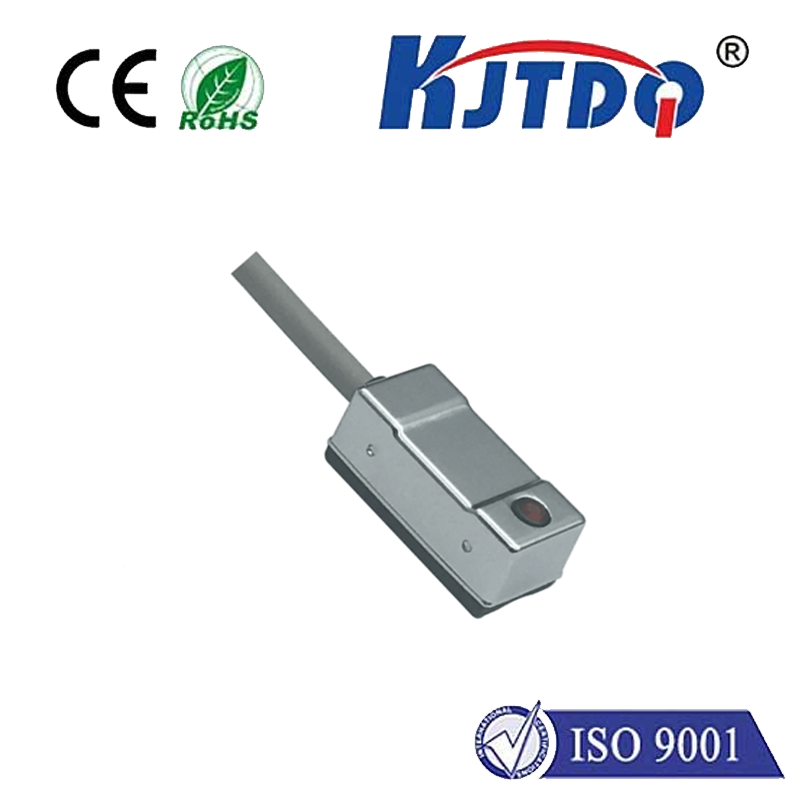
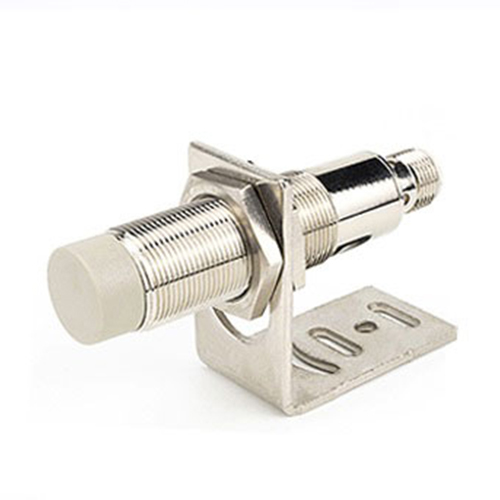
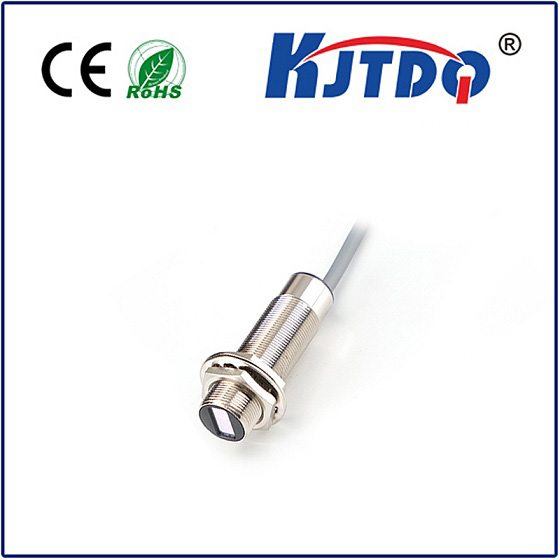
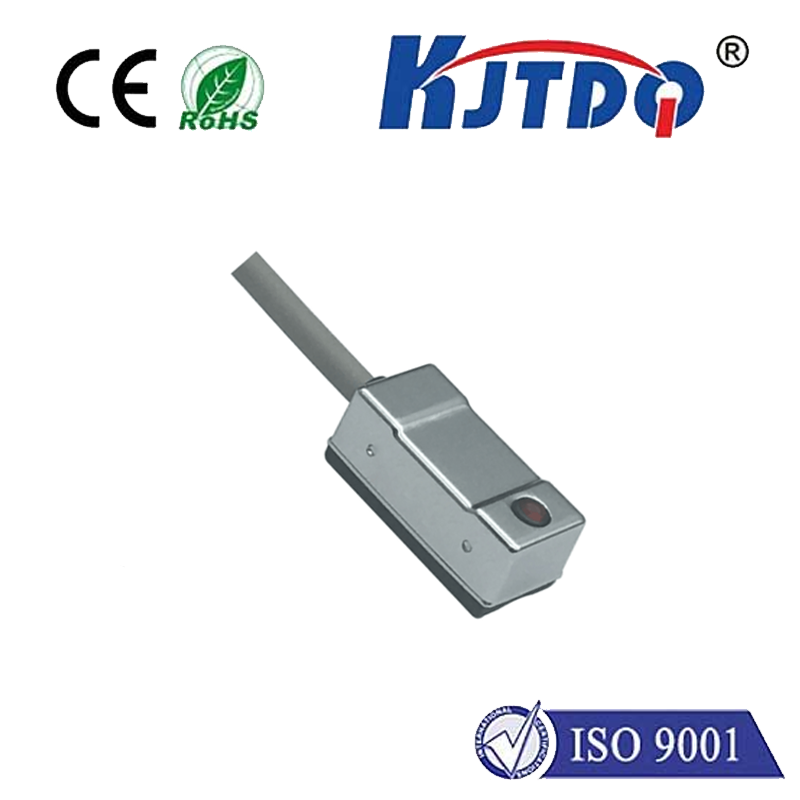
Choosing a KJTDQ series 2 wire capacitive sensor brings specific advantages. These sensors typically feature adjustable sensitivity, allowing technicians to fine-tune the sensing range and ignore unwanted background materials, like the container wall. This prevents false triggering. Many models are built with robust housings (often in PBT or stainless steel) offering high protection ratings like IP67, making them resistant to dust, water jets, and harsh cleaning chemicals common in industrial environments. Their compact size enables installation in tight spaces where other sensor types might not fit.
When integrating a 2 wire capacitive sensor into a DC circuit, it is vital to remember that a small leakage current (often called residual current) flows even when the sensor is in the "off" state. This is a characteristic of the 2 wire DC design. Engineers must ensure the connected load (like a PLC input or relay coil) has a low enough impedance to prevent accidental activation by this current. Most modern PLC inputs are designed to handle this, but it's a key consideration during system design. For AC circuits, this is generally not an issue.
Maintenance is straightforward. Keeping the sensor face clean from buildup of dust, moisture, or product residue is the primary task, as contamination can affect sensitivity and range. Regular functional checks as part of a preventive maintenance schedule ensure long-term reliability. Troubleshooting usually involves verifying power supply voltage, checking for object presence within the rated sensing distance, and ensuring the sensitivity is correctly adjusted for the application.
The evolution towards Industry 4.0 and smart factories further underscores the value of reliable sensing. A 2 wire capacitive proximity sensor, like those in the KJTDQ range, provides a fundamental data point—presence or absence—that feeds into larger control and monitoring systems. Its durability and material-agnostic detection capability reduce downtime and increase line flexibility. For engineers and system integrators looking for a cost-effective, low-maintenance, and highly adaptable solution for non-contact detection of diverse materials, the 2 wire capacitive proximity sensor remains a superior and intelligent choice, forming a silent yet critical backbone for automated processes worldwide.