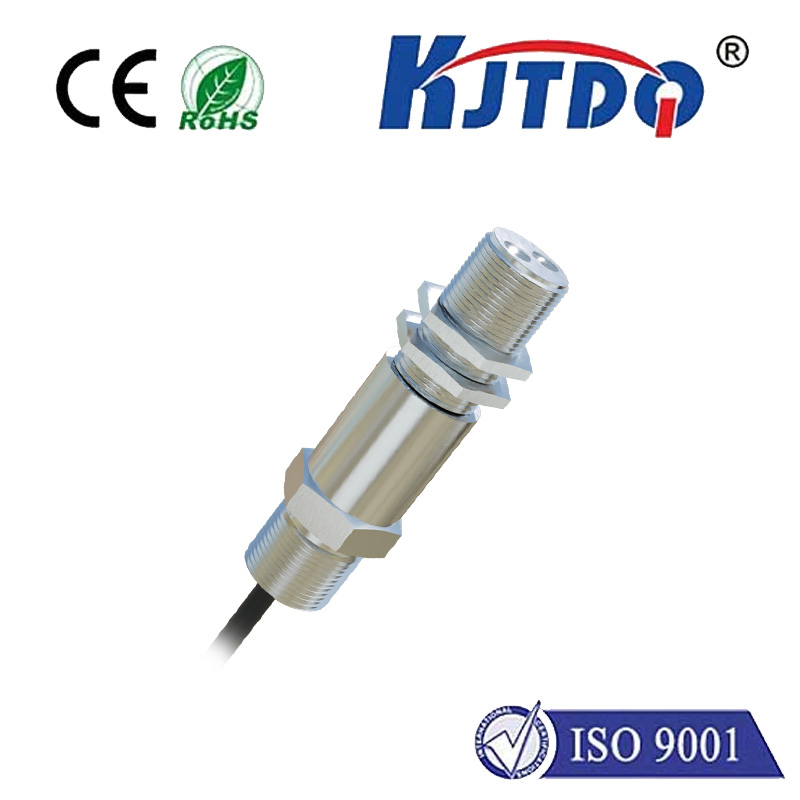
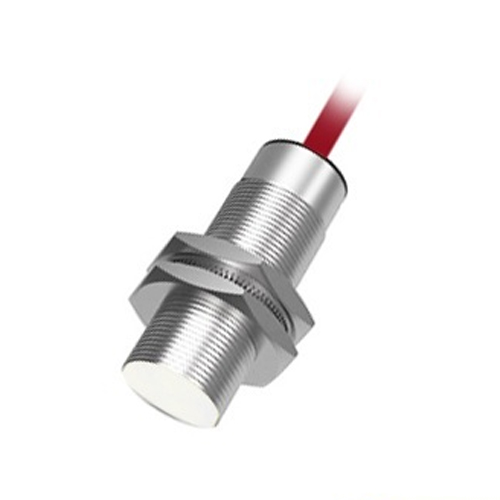
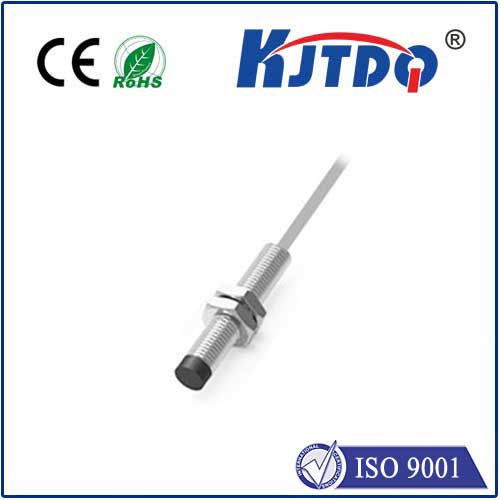
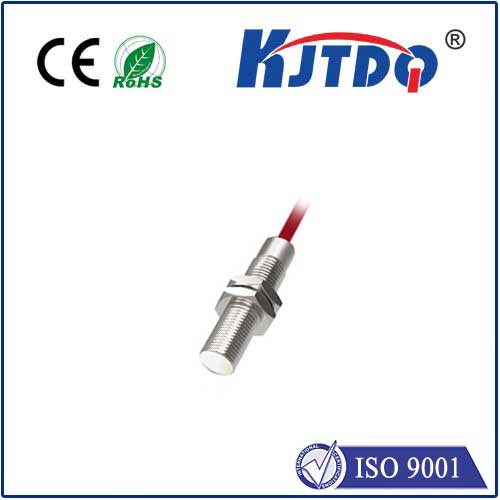
In modern industrial automation, achieving precise object detection is crucial for efficiency and safety. Analog inductive proximity sensors have emerged as a key technology in this domain, offering continuous output signals that reflect the exact distance to a target. Unlike digital sensors that provide only on/off states, analog variants deliver nuanced data, enabling finer control in applications such as positioning, sorting, and quality inspection. The KJTDQ series exemplifies this advancement, designed to meet rigorous industrial demands with robust construction and reliable performance.
These sensors operate on the principle of electromagnetic induction. When a metal object enters the sensing range, it disrupts the sensor's oscillating magnetic field, generating a change in output current or voltage proportional to the distance. This analog signal—typically 4-20 mA or 0-10 V—allows for real-time monitoring and adjustment, reducing errors in automated systems. For instance, in conveyor belt systems, KJTDQ analog sensors can detect minute variations in object placement, triggering corrective actions to prevent jams or misalignments. Their ability to function in harsh environments, with resistance to dust, moisture, and temperature fluctuations, makes them ideal for manufacturing, packaging, and automotive industries.
The benefits of using analog inductive proximity sensors extend beyond accuracy. They contribute to predictive maintenance by providing trend data on machine wear, helping avoid unexpected downtime. With easy integration into PLCs and control systems, KJTDQ models support seamless automation upgrades. As industries embrace Industry 4.0, the demand for intelligent sensing solutions grows, and analog sensors play a pivotal role in enabling smart factories. By choosing high-quality options like KJTDQ, businesses can enhance operational precision, reduce costs, and boost productivity, ensuring a competitive edge in today's fast-paced market.