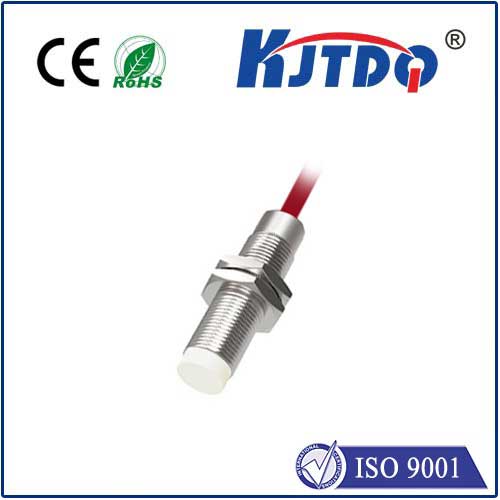
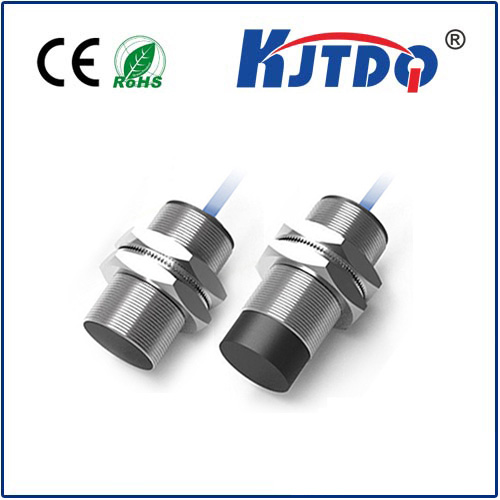
In the rapidly evolving landscape of industrial automation, precision and reliability are non-negotiable. The integration of a proximity sensor cylinder represents a significant leap forward in achieving these goals. This innovative device combines the robust linear motion of a pneumatic or hydraulic cylinder with the non-contact detection capabilities of an inductive or capacitive proximity sensor. The result is a compact, intelligent component that not only performs its primary actuation function but also provides real-time, accurate feedback on piston position.
Traditional systems often rely on separate cylinders and external sensors, leading to complex mounting arrangements, potential alignment issues, and increased maintenance. The proximity sensor cylinder eliminates these challenges by embedding the sensing element directly into the cylinder body. This built-in design ensures perfect alignment and protection from harsh environmental factors like dust, coolant, and mechanical vibration, which are common in manufacturing plants, packaging lines, and automotive assembly applications.
The operational principle is elegantly simple. A sensor, typically inductive for detecting metal targets or capacitive for non-metallic materials, is mounted within the cylinder's end cap or along its barrel. A small, integrated magnet or a specially designed piston itself acts as the target. As the piston moves through its stroke, the sensor detects its presence at predefined points, sending a clear digital signal to the programmable logic controller (PLC). This allows for precise control over stroke endpoints, intermediate positions, and velocity, enabling more complex and efficient machine sequences.
The benefits for engineers and plant managers are substantial. First, it drastically simplifies machine design and reduces installation time. There's no need for cumbersome brackets to hold external sensors, saving space in often crowded control cabinets and on machine frames. Wiring is also simplified, as the sensor leads are integrated, leading to a cleaner layout and reduced points of failure. This translates directly into lower total cost of ownership through decreased assembly time and easier maintenance.
Furthermore, the reliability of these systems enhances overall equipment effectiveness (OEE). By providing direct and unwavering feedback on cylinder position, they prevent malfunctions caused by mispositioning. In a pressing operation, for instance, knowing the exact position of the press ram ensures safety and product quality. In material handling, it guarantees a gripper is fully open or closed before moving, preventing drops or collisions. This level of control minimizes unplanned downtime, reduces scrap rates, and boosts production throughput.
When selecting a proximity sensor cylinder, key specifications must be considered. These include the cylinder's bore size, stroke length, operating pressure, and the type of sensor (e.g., PNP or NPN output, normally open or closed). Compatibility with existing control systems is paramount. Modern versions often feature LED indicators for easy diagnostics and are designed to meet international protection standards like IP67, making them suitable for washdown environments in food and beverage processing.
Looking ahead, the role of smart cylinders like these will only expand with the growth of Industry 4.0 and the Industrial Internet of Things (IIoT). The data generated by these sensors can be fed into larger networks for predictive maintenance analytics, providing alerts before a failure occurs and optimizing production schedules. They are fundamental building blocks for creating more adaptive, efficient, and connected factories.
In conclusion, the proximity sensor cylinder is far more than just a component; it is a cornerstone of modern automated system design. By merging actuation with sensing, it delivers unparalleled reliability, simplifies engineering, and paves the way for smarter, data-driven manufacturing. For any operation seeking to improve precision, reduce complexity, and future-proof their machinery, integrating these intelligent devices is a strategically sound decision.