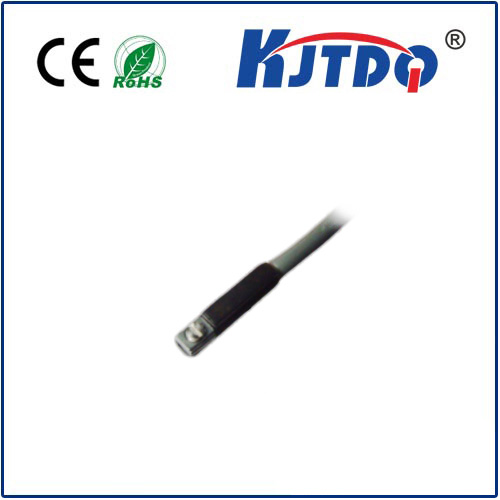
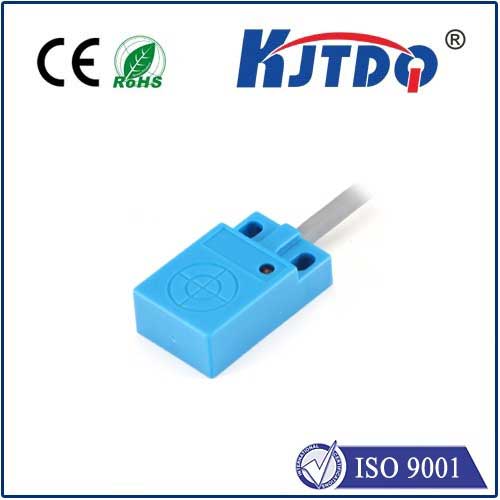
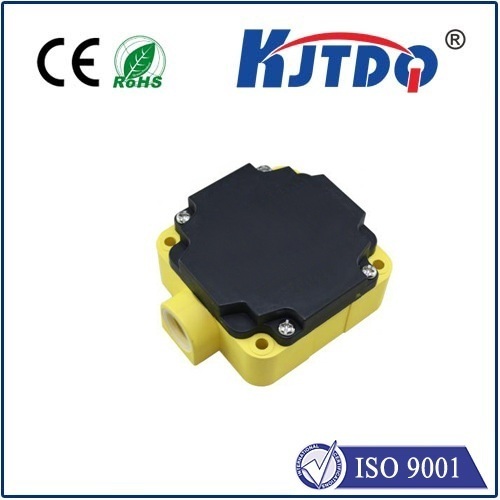
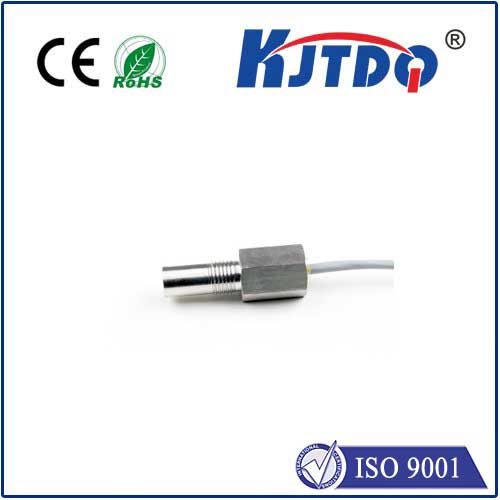
In the realm of industrial automation, precision and reliability are non-negotiable. The Fuji Electric PE-B4D proximity sensor stands as a testament to engineering excellence, designed to meet the rigorous demands of modern manufacturing and control systems. This compact, high-performance sensor is engineered to deliver consistent, accurate detection of metallic objects without physical contact, making it an indispensable component in countless applications.
The core technology of the PE-B4D series lies in its robust inductive sensing principle. It generates an electromagnetic field from its sensing face. When a metallic target enters this field, it induces eddy currents within the target, causing a change in the oscillation amplitude within the sensor. This change is detected by the internal circuit, triggering a solid-state output switch. This non-contact operation eliminates mechanical wear and tear, ensuring a significantly longer operational lifespan compared to mechanical limit switches. The PE-B4D is particularly noted for its stable detection performance, even in challenging industrial environments with factors like electrical noise, temperature variations, or the presence of dust and oil mist.
One of the defining features of the Fuji Electric PE-B4D is its versatile form factor and mounting options. Its compact, rectangular design allows for easy installation in space-constrained locations. Available in both shielded and unshielded versions, it offers flexibility for different application needs. Shielded models can be flush-mounted in metal without a loss of sensing distance, while unshielded types typically offer a longer sensing range. The sensing distance for the PE-B4D series is precisely calibrated, with models like the PE-B4D-1 offering a standard range suitable for a wide array of positioning and object detection tasks.
Durability is a cornerstone of its design. Housed in a rugged, resin-based body, the PE-B4D is built to withstand the rigors of the factory floor. It boasts high resistance to environmental factors, including short-circuit protection, overload protection, and reverse polarity protection. This robust construction minimizes downtime and maintenance costs, providing a reliable sensing solution for high-cycle operations. Its consistent performance contributes directly to improved production efficiency and product quality control.
The application spectrum for the Fuji Electric PE-B4D proximity sensor is remarkably broad. It is a critical component in automated assembly lines for part presence verification, in robotic arms for end-of-arm tooling positioning, in conveyor systems for counting and sorting, and in machine tools for monitoring tool position or workpiece clamping. Its reliability makes it equally suitable for safety interlock systems, where fail-safe detection is paramount. From packaging machinery to automotive manufacturing, the PE-B4D provides the essential "eyes" for automated processes.
When integrating the PE-B4D, engineers appreciate its straightforward wiring and compatibility. It typically operates on a standard DC power supply (commonly 12-24V DC) and provides a digital output (PNP or NPN transistor output) that can be easily interfaced with Programmable Logic Controllers (PLCs), frequency inverters, or other control units. An LED status indicator provides immediate visual confirmation of the sensor's operation and output state, simplifying setup and troubleshooting.
Choosing the Fuji Electric PE-B4D is an investment in operational stability. It represents a synergy of Fuji Electric's decades of expertise in electrical components and a deep understanding of industrial automation needs. For system integrators and plant managers seeking a proven, dependable, and precise non-contact detection solution, the PE-B4D series offers a compelling blend of performance, durability, and value. It is more than just a sensor; it is a foundational element for building smarter, more resilient, and more efficient automated systems, ensuring that every detection event is accurate and every process step is confirmed.