In the world of industrial automation, precision, reliability, and durability are non-negotiable. For applications demanding accurate non-contact detection of metallic objects within a tight 6mm range, the inductive proximity sensor stands as an indispensable component. This specialized sensor, particularly the 6mm variant, offers a compact and robust solution for countless challenging environments where mechanical switches or optical sensors might fail. Understanding its operation, key features, and ideal applications is crucial for engineers and system integrators aiming to optimize their machinery's performance and uptime.
At its core, an inductive proximity sensor 6mm operates on the principle of electromagnetic induction. The sensor generates a high-frequency oscillating electromagnetic field from its active face. When a metallic target—typically ferrous metals like steel or iron, though specific models can detect non-ferrous metals—enters this field within its nominal sensing distance of 6mm, eddy currents are induced on the target's surface. This causes a change in the oscillation amplitude within the sensor's coil. The sensor's internal circuitry detects this change and triggers a solid-state output switch, sending a clean, bounce-free signal to the controller, all without any physical contact with the target. This non-contact nature is the source of its exceptional longevity and reliability.
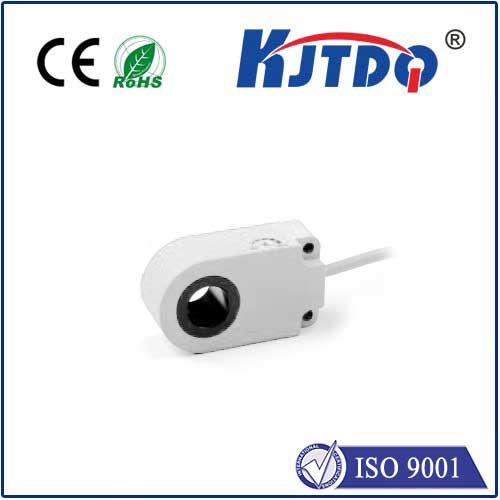
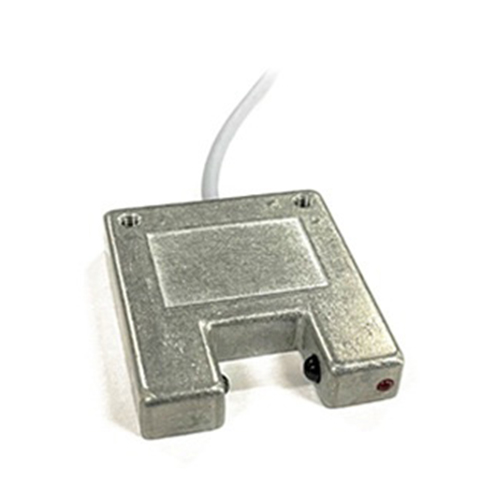
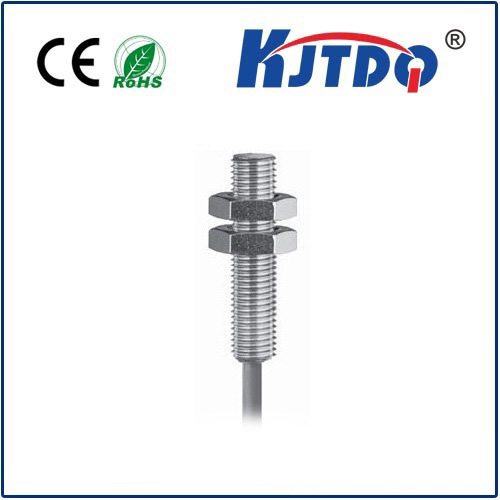
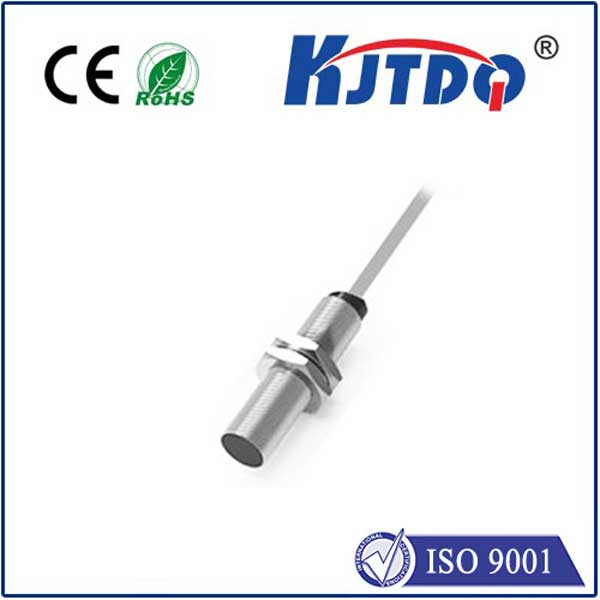
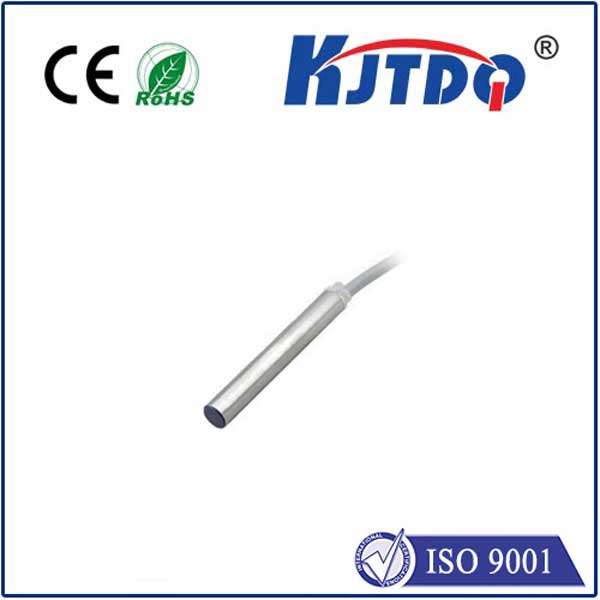
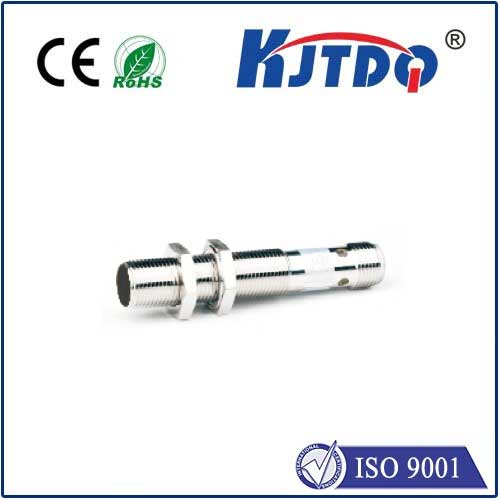
The defining characteristic of the 6mm inductive sensor is its compact form factor. This small size allows for installation in space-constrained locations where larger sensors simply cannot fit. Despite its miniature dimensions, it is engineered for industrial toughness. Housed in materials like nickel-plated brass, stainless steel, or PBT plastic, these sensors boast high resistance to shock, vibration, and environmental contaminants. Many models feature an IP67 or IP68 ingress protection rating, making them impervious to dust and capable of withstanding temporary immersion in water, perfect for washdown areas in food processing or harsh conditions in metalworking.
Another significant advantage is their insensitivity to environmental factors that plague other sensor types. Unlike capacitive sensors, they are unaffected by target material density or moisture. Unlike photoelectric sensors, they are completely immune to ambient light, dust, fog, or grime covering the lens. This makes the inductive proximity sensor 6mm exceptionally reliable in dirty, oily, or wet industrial settings such as machine tools, injection molding machines, and automated assembly lines. Their output is consistently precise, detecting only the intended metallic objects.
Wiring and integration are straightforward. Common output configurations include NPN (sinking) and PNP (sourcing) transistor outputs in 3-wire designs, as well as 2-wire AC/DC versions. The 6mm sensing range provides a perfect balance for applications requiring close-tolerance detection, such as verifying the presence of a metal part in a fixture, counting gear teeth, monitoring piston end position in cylinders, or serving as a limit switch on small automated guided vehicles (AGVs). They are also extensively used for end-of-stroke detection, robotic arm positioning, and in high-speed packaging machinery to detect metallic labels or caps.
When selecting a 6mm inductive proximity sensor, several specifications demand attention. The sensing distance, or "Sn," is nominally 6mm, but factors like target material, size, and shape can affect the actual switching point. The reduction factor for different metals must be considered; for instance, aluminum or copper requires a much closer distance than steel. The operating voltage range (e.g., 10-30V DC), switching frequency (how many times per second it can detect an object), and temperature rating are also critical for ensuring compatibility with the control system and the operating environment.
Installation is key to optimal performance. Designers must account for the sensor's mounting style—flush or non-flush. Flush-mounted sensors can be embedded in metal without affecting their sensing range, while non-flush models offer a longer range but require a clear surrounding area. Proper alignment and ensuring the target approaches the active face correctly are essential for repeatable operation. Regular maintenance is minimal, often involving just a wipe to keep the sensing face clean of heavy metallic debris buildup.
In conclusion, the inductive proximity sensor 6mm is a masterpiece of focused engineering. It delivers unwavering reliability in a tiny, rugged package. For any application involving the non-contact detection of metal objects at a short, precise distance, this sensor provides a solution that maximizes machine efficiency, minimizes downtime, and withstands the test of time and tough conditions. Its simplicity, robustness, and consistent performance make it a fundamental building block in modern industrial automation, from simple machines to complex robotic systems.