Проверка
Проверка
Проверка
Проверка
Проверка
Проверка
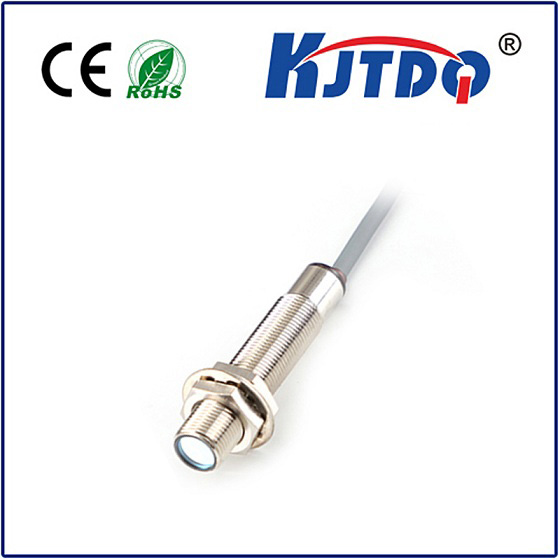
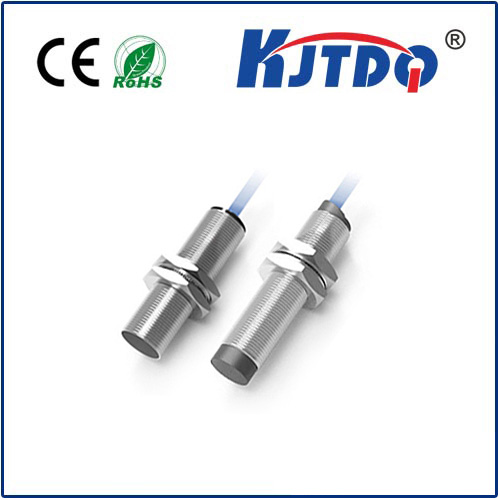
In the demanding environment of industrial automation, reliability and precision are non-negotiable. The 34mm diameter inductive proximity sensor stands as a cornerstone technology for countless applications requiring non-contact detection of metallic objects. Engineered for durability, these sensors offer a robust solution where mechanical switches fail, operating effectively in the presence of dust, oil, and coolant splashes. Their fundamental principle is based on generating an electromagnetic field. When a metallic target enters this field, it induces eddy currents within the target, causing a change in the sensor's oscillation amplitude. This change is detected by the internal circuitry, which then triggers a solid-state output switch.
The specific 34mm form factor provides significant advantages. Its larger size typically allows for a longer sensing range compared to smaller-diameter sensors, enabling greater installation flexibility and standoff distance from the target. The sturdy housing, often made of nickel-plated brass or stainless steel, offers exceptional resistance to physical impact and harsh industrial chemicals. This makes the 34mm inductive sensor ideal for heavy-duty applications in metalworking, automotive assembly lines, material handling, and packaging machinery. Common uses include position verification of machine parts, end-of-travel detection on actuators, counting metallic products on a conveyor, and monitoring the presence of tools in a CNC machine.
Selecting the right 34mm inductive sensor involves several key technical considerations. First is the sensing distance, or "sn," which is rated for a standard target. It is crucial to note that this nominal range is defined for mild steel; for other metals like aluminum or copper, the effective sensing distance is reduced and requires consultation of correction factors. Secondly, the output type must be chosen: NPN (sinking) or PNP (sourcing), which defines how the sensor interfaces with the control system's PLC. A third critical feature is the flush-mounting capability. Many 34mm sensors are shielded (flush-mountable), meaning they can be installed embedded in metal without affecting their sensing performance, allowing for a very protected installation. Unshielded types offer a longer range but require a non-metallic surround.
Installation and maintenance practices are straightforward but vital for long-term performance. Ensuring a stable power supply within the sensor's specified voltage range is essential. Proper mounting, with attention to the recommended clearance from other metal objects, prevents false triggering. While these sensors are virtually wear-free due to their non-contact nature, periodic checks for accumulated debris on the sensing face and verification of output signals under load are recommended as part of a preventive maintenance routine. This proactive approach minimizes unplanned downtime.
The evolution of these sensors continues, with modern 34mm inductive units incorporating advanced features like IO-Link communication. This digital interface allows for parameter setting, real-time diagnostics, and process data reporting, paving the way for Industry 4.0 predictive maintenance strategies. The inherent robustness of the 34mm inductive proximity sensor, combined with its proven detection technology, ensures it remains a fundamental and reliable component for engineers designing automated systems that demand consistent performance under tough conditions. Its ability to provide a simple, binary "metal present or not" signal forms the backbone of countless control and safety sequences, making it an indispensable tool in the industrial landscape.