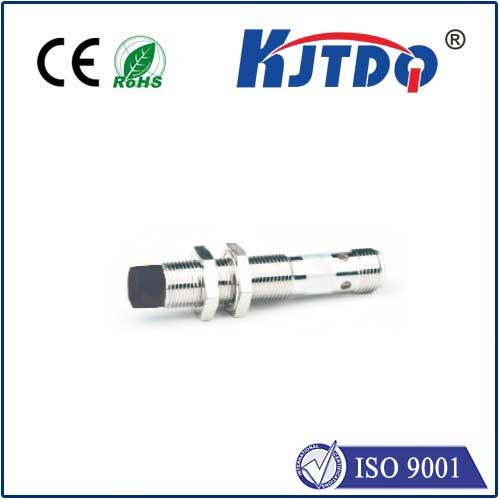
In the rapidly evolving landscape of industrial automation, the demand for reliable, non-contact detection solutions has never been greater. Among the array of sensing technologies available, the capacitive proximity sensor stands out for its unique capabilities and versatile applications. Unlike its inductive counterpart, which detects only metals, a capacitive sensor can detect a wide range of materials, including liquids, plastics, glass, and wood, by measuring changes in capacitance. This fundamental principle allows it to sense the presence or absence of an object without any physical contact, making it indispensable in environments where hygiene, delicate handling, or material diversity are critical concerns.
The core operation of a capacitive proximity sensor revolves around an oscillator circuit. The sensor face and an internal electrode form a capacitor. When no target is present, the oscillator is inactive. As a target object enters the sensing field, it alters the dielectric constant between the electrodes, increasing the capacitance. Once this change reaches a predetermined threshold, the oscillator begins to oscillate, triggering a signal change in the output circuit. This output can then be used to control machinery, signal a PLC, or activate an alarm. The sensing range, while typically shorter than some other sensor types, is highly stable and can be finely tuned for specific applications, often with built-in potentiometers for sensitivity adjustment.
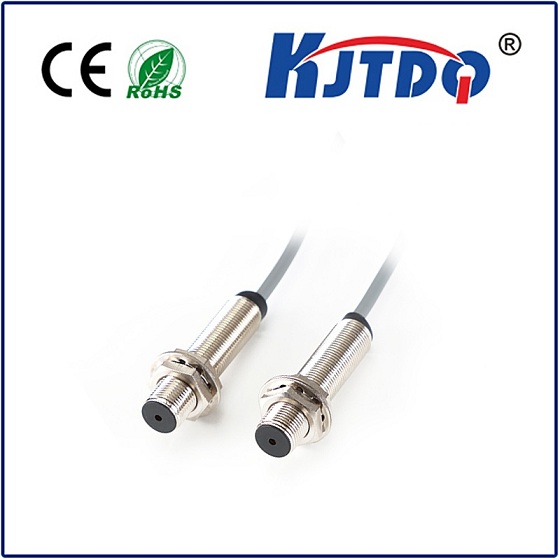
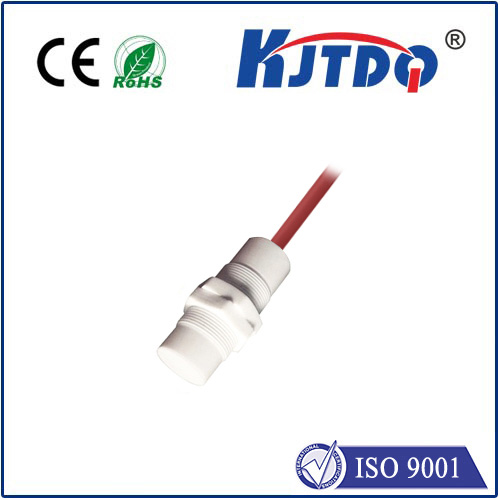
One of the most significant advantages of the KJTDQ series and similar advanced capacitive sensors is their robustness in challenging conditions. They are often housed in rugged, sealed enclosures rated IP67 or higher, making them resistant to dust, water, and even harsh chemical washdowns common in food and beverage or pharmaceutical production lines. This durability ensures minimal downtime and maintenance. Furthermore, their ability to detect through non-metallic barriers, such as plastic hopper walls or glass containers, allows for innovative installation options that protect the sensor from direct exposure to corrosive or abrasive materials.
Application scenarios for capacitive proximity sensors are vast and varied. In packaging machinery, they reliably detect the level of powdered or granular materials in non-metallic silos, preventing overfills or shortages. On assembly lines, they verify the presence of plastic components, bottle caps, or labels. In liquid processing, they monitor fluid levels in tanks, regardless of the liquid's conductivity. The automotive industry utilizes them for detecting composite materials and ensuring proper seating of non-metallic parts. Even in consumer electronics, they form the basis of touch-sensitive controls.
When integrating a capacitive sensor like the KJTDQ model into a system, several practical considerations ensure optimal performance. Proper mounting is crucial; sensors should be installed away from metal grounding rings or large metallic structures that could create a parasitic capacitance and false triggering. The sensing distance can be affected by the target material's density and size—larger, denser objects are detected more easily. For level detection, it is often recommended to use a sensor with a flat face mounted horizontally to avoid material buildup. Regular calibration checks, especially after installation in a new environment, help maintain accuracy.
Looking ahead, the integration of smart features and IO-Link communication into capacitive sensors is a growing trend. These "intelligent" sensors can provide diagnostic data, such as signal strength, temperature, and operating hours, directly to control systems, enabling predictive maintenance and finer process optimization. This digital transformation aligns with Industry 4.0 initiatives, making the humble capacitive proximity sensor a key data point in the connected factory of the future.
In conclusion, the capacitive proximity sensor, exemplified by the robust KJTDQ series, is a cornerstone of modern industrial sensing. Its ability to detect diverse materials through non-metallic barriers with high reliability makes it a flexible and powerful tool for engineers and system integrators. By understanding its operating principle and following best practices for application and installation, businesses can significantly enhance the precision, efficiency, and cleanliness of their automated processes, driving productivity and quality to new levels.