In the rapidly evolving landscape of industrial automation, the demand for precise, reliable, and efficient sensing technology has never been greater. Among the various solutions available, the photoelectric sensor module stands out as a cornerstone for countless applications. These devices, which utilize light beams to detect the presence, absence, or distance of objects, are integral to modern manufacturing, packaging, material handling, and safety systems. The core principle involves an emitter that projects a light beam—often infrared, visible red, or laser—and a receiver that detects changes in the received light. When an object interrupts or reflects this beam, the sensor triggers a response, providing critical data to control systems.
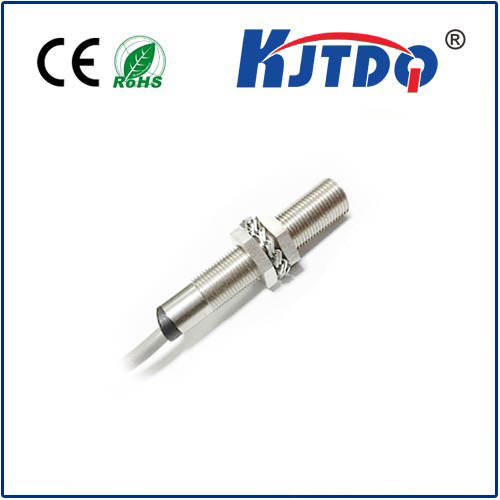
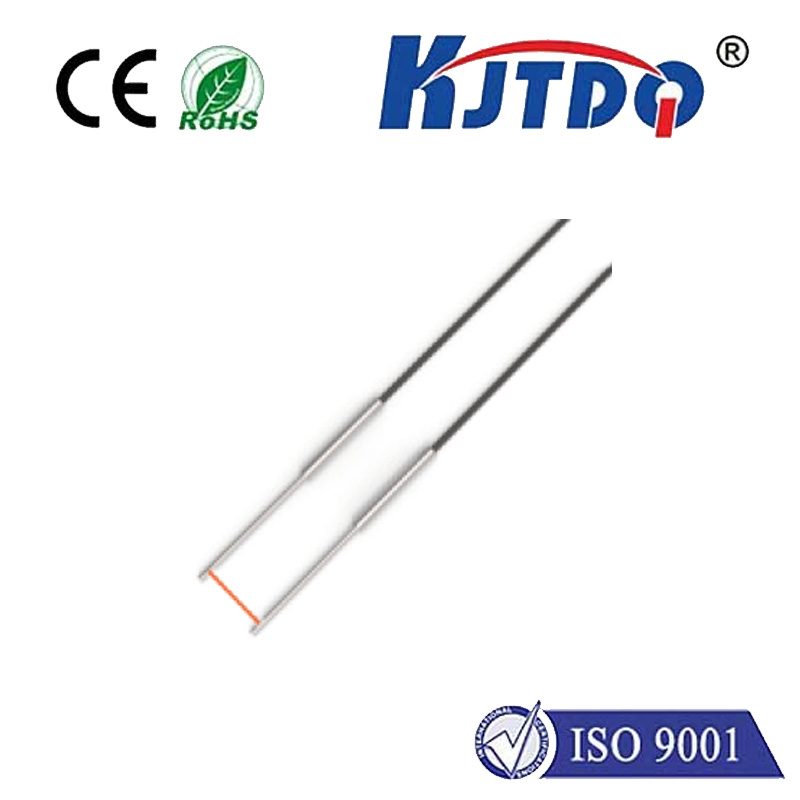
The versatility of photoelectric sensors is remarkable. They are categorized mainly into three types: through-beam, retro-reflective, and diffuse reflective. Through-beam sensors, with separate emitter and receiver units, offer the longest sensing ranges and high reliability, ideal for detecting opaque objects on conveyor belts. Retro-reflective models use a single unit and a reflector, balancing range and installation convenience, suitable for clear object detection when equipped with polarization filters. Diffuse reflective sensors detect objects by bouncing light directly off the target, providing a compact solution for proximity sensing, though range can be affected by object color and surface texture. Advanced versions include background suppression and foreground suppression models, which enhance accuracy by ignoring distant or close backgrounds, respectively.
The integration of a photoelectric sensor module into systems brings transformative benefits. Primarily, it boosts operational efficiency by enabling high-speed, non-contact detection. Unlike mechanical switches, these sensors have no moving parts, leading to minimal wear and tear and significantly reduced maintenance costs. Their ability to detect a wide variety of materials—from metals and plastics to glass and liquids—makes them incredibly adaptable. Furthermore, modern modules feature robust designs with high ingress protection (IP) ratings, allowing them to perform consistently in harsh environments with dust, moisture, or temperature variations. This reliability is crucial for minimizing downtime and ensuring continuous production flow.
A key advancement in this field is the development of intelligent sensor modules with digital interfaces and programmability. These smart sensors can communicate directly with programmable logic controllers (PLCs) or industrial networks, providing not just binary signals but also diagnostic data. This facilitates predictive maintenance, as the system can alert operators to potential issues like lens contamination or weakening light intensity before a failure occurs. Additionally, the miniaturization of components has led to more compact sensor designs, enabling installation in space-constrained applications without sacrificing performance.
In practical applications, the impact is profound. In automotive assembly lines, photoelectric sensors ensure precise positioning of components. In packaging machinery, they count products, verify fill levels, and inspect labels. In warehouse automation, they guide autonomous vehicles and manage inventory on shelves. Safety systems also rely on them to create light curtains that protect workers from machinery hazards. The choice of a specific module depends on factors like required sensing range, response time, environmental conditions, and the physical properties of the target object.
Looking ahead, the convergence of photoelectric sensing with the Internet of Things (IoT) and Industry 4.0 is set to unlock new potentials. Sensors are becoming nodes in interconnected networks, contributing data to cloud platforms for real-time analytics and optimization. This evolution promises even greater efficiency, flexibility, and intelligence in automated processes. For engineers and system integrators, selecting a high-quality, reliable photoelectric sensor module is not merely a technical decision but a strategic investment in operational excellence. By providing accurate, real-time feedback, these modules form the sensory foundation upon which smart, responsive, and efficient automation systems are built, driving productivity and innovation across industries.