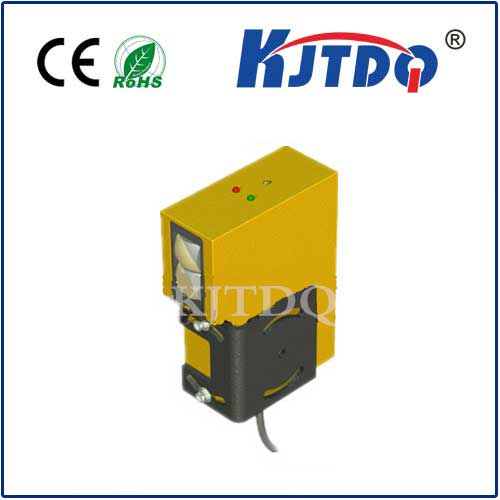
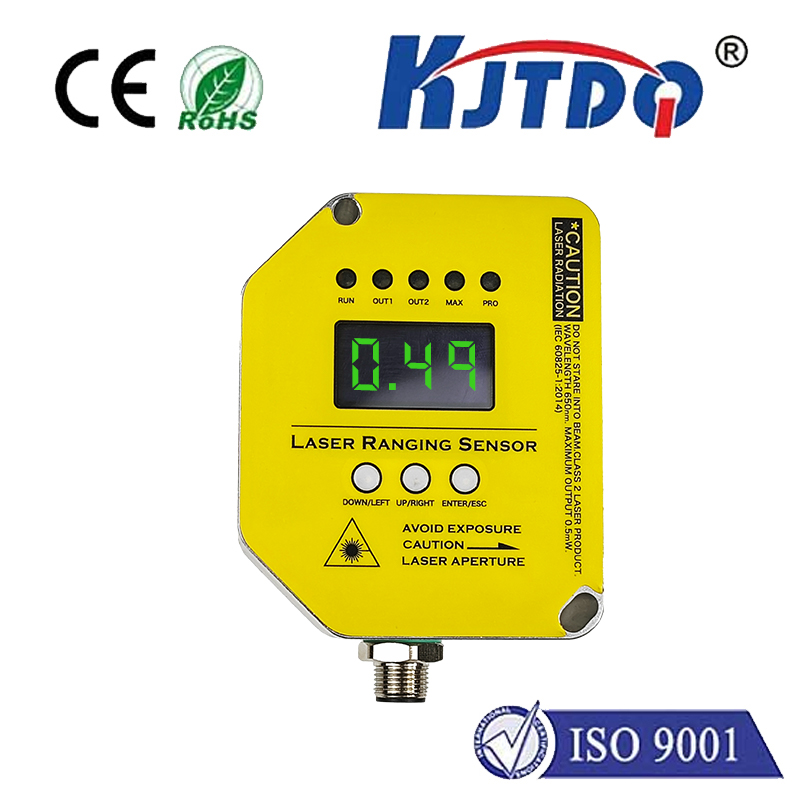
In today's automated world, the unseen heroes ensuring precision, safety, and efficiency are often sensors. Among these, the photoelectric sensor stands out as a cornerstone technology. But what exactly is a photoelectric sensor, and how does it function? At its core, a photoelectric sensor is a device that uses a light beam, typically from an LED or laser diode, to detect the presence, absence, or distance of an object. It operates on a simple yet profound optical principle: it emits a beam of light and analyzes the light that returns to its receiver. The magic happens in how this returning light is interpreted.
There are three primary operating modes for photoelectric sensors, each suited for different industrial and commercial challenges. The first is the through-beam mode. This setup involves two separate units: an emitter and a receiver placed opposite each other. The emitter continuously sends a light beam to the receiver. An object is detected when it interrupts this beam. This mode offers the longest sensing range and highest reliability, as it is less affected by the object's color, reflectivity, or surface finish. It's ideal for applications requiring precise detection over long distances, such as in material handling or safety curtains on large machinery.
The second common mode is the retro-reflective sensor. Here, a single unit houses both the emitter and receiver. It projects a light beam towards a specialized reflector, which bounces the beam directly back. Detection occurs when an object breaks this reflected beam. This mode provides a good balance between range and installation simplicity, as it requires wiring only on one side. However, it can be fooled by highly reflective objects that might bounce light back on their own. To counter this, sensors often use polarized light filters, which ensure only light reflected from the correct reflector is recognized.
The third, and most versatile, mode is the diffuse or proximity mode. In this configuration, the emitter and receiver are again in one housing, but there is no separate reflector. The sensor detects an object by the light that diffuses or reflects off the object's surface back to the receiver. The detection range is shorter and highly dependent on the object's color and texture—lighter, more reflective materials are detected from farther away. This mode is perfect for applications where mounting a reflector or a separate receiver is impractical, such as detecting objects on a conveyor belt or in packaging machines.
The applications of photoelectric sensors are vast and integral to modern automation. In manufacturing, they count bottles on a production line, ensure labels are correctly positioned, and verify the presence of components for assembly robots. In logistics, they control the sorting of packages in massive distribution centers. In the automotive industry, they ensure robotic arms weld at the exact correct spot. Beyond industry, they are found in everyday life: the automatic doors at supermarkets, the paper detection in printers, and the touchless faucets in public restrooms all rely on this technology.
Choosing the right photoelectric sensor requires careful consideration of several factors. The sensing distance is paramount—will the object be inches or feet away? The environmental conditions are critical; will the sensor face dust, moisture, vibration, or extreme temperatures? Many industrial sensors come with robust IP (Ingress Protection) ratings for such harsh environments. The required response time is another key factor; high-speed production lines need sensors that can detect objects in milliseconds. Finally, the object's characteristics—its size, color, material, and surface—will determine whether a through-beam, retro-reflective, or diffuse sensor is most appropriate.
Recent advancements continue to push the boundaries of what photoelectric sensors can do. Background suppression technology allows diffuse sensors to ignore objects beyond a set distance, providing precise detection even against a cluttered backdrop. Fiber optic versions allow sensing in extremely hot, cramped, or hazardous locations by using flexible cables to transmit light to and from the target area. Furthermore, the integration of IO-Link communication enables sensors to provide rich diagnostic data, such as signal strength or lens contamination alerts, facilitating predictive maintenance and smarter factory networks.
In conclusion, photoelectric sensors, or optical sensors, are a fundamental and adaptable technology. From the simple breaking of a light beam to sophisticated background analysis, they provide the "eyes" for automated systems. Their reliability, versatility, and evolving intelligence make them indispensable for achieving the levels of efficiency, quality, and safety demanded in contemporary industrial and technological landscapes. Understanding their principles and applications is the first step in leveraging their full potential for innovation and optimization.