In the complex landscape of industrial automation, reliable sensing technology forms the backbone of efficient and safe operations. Among the various sensor types available, photoelectric sensors are renowned for their versatility and non-contact detection capabilities. A specific configuration that offers enhanced functionality and control is the 4-wire photoelectric sensor. Models from established manufacturers like MSE Italy are engineered to meet rigorous industrial demands, providing precise solutions for diverse applications.
A photoelectric sensor operates on a simple yet powerful principle: it emits a beam of light, typically from an LED, and detects changes in the received light signal. The presence or absence of an object interrupts or reflects this beam, triggering an output signal. The 4-wire design expands upon the basic functionality of simpler 2-wire or 3-wire sensors by incorporating separate paths for power supply and output signals. This architecture typically includes two wires for the power supply (often 10-30V DC) and two wires for the output—one for the switched output signal (like a relay or solid-state output) and a common return. This separation allows for greater flexibility in control circuits, enabling the use of different output types (e.g., NPN or PNP) and simplifying integration with Programmable Logic Controllers (PLCs) and other control systems.
The advantages of opting for a 4-wire photoelectric sensor, such as those produced by MSE Italy, are significant. Firstly, they provide electrical isolation between the sensor's power circuit and its output switching circuit. This isolation enhances reliability and protects sensitive control equipment from potential electrical noise or surges originating from the sensor's power line. Secondly, these sensors often support a wider range of output configurations. Users can select models with relay outputs for switching higher loads or transistor outputs (NPN/PNP) for high-speed switching compatible with modern PLC digital inputs. This versatility makes a 4-wire sensor suitable for a broader spectrum of tasks, from controlling a motor starter (using a relay output) to providing a high-speed signal for counting operations on a packaging line.
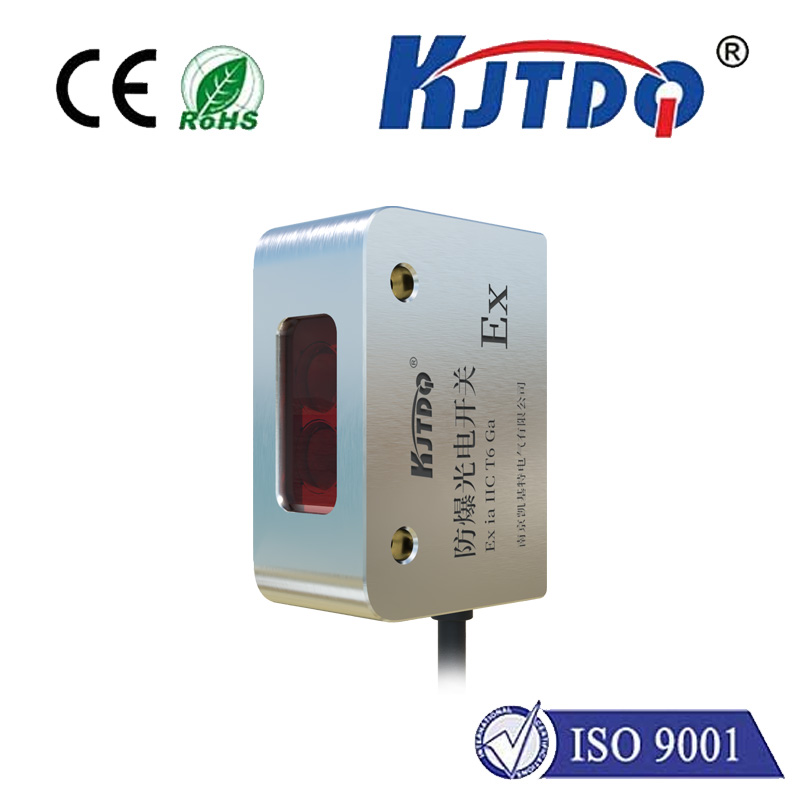
MSE Italy, as a recognized manufacturer in the field of industrial sensors, designs its 4-wire photoelectric sensors with a focus on durability and performance. These units are typically housed in robust casings rated for IP67 or higher, making them resistant to dust, water jets, and the vibrations common in factory environments. They are built to deliver consistent performance across varying temperatures and lighting conditions. Features often include adjustable sensing ranges, sensitivity potentiometers for fine-tuning, and visible LED indicators for power and output status, which are crucial for quick installation and troubleshooting.
Practical applications for these sensors are vast across multiple industries. In material handling and packaging, they are indispensable for object detection on conveyor belts, precise positioning for robotic arms, and accurate bottle or box counting. In the automotive sector, they ensure components are present and correctly aligned during assembly processes. Within automated storage and retrieval systems, they provide critical feedback for pallet positioning and height detection. The robust construction of MSE Italy's sensors makes them equally viable in harsh environments like food and beverage processing or outdoor logistics, where they might be exposed to moisture, temperature extremes, or cleaning chemicals.
When integrating a 4-wire photoelectric sensor into a system, proper wiring is paramount. It is essential to consult the specific datasheet for the model in use. Generally, the two power wires connect to a suitable DC voltage source, respecting polarity. The output wires connect to the load (e.g., a PLC input, a relay coil, or a lamp). Correctly matching the output type (sourcing or sinking) to the control system's requirements prevents malfunctions. Regular maintenance involves keeping the lens clean from dust, oil, or debris to ensure an unimpeded light beam, and periodically verifying the sensor's alignment and response.
In conclusion, the 4-wire photoelectric sensor represents a sophisticated and flexible solution for modern industrial sensing challenges. Brands like MSE Italy provide reliable, high-quality components that offer the benefits of electrical isolation, output versatility, and environmental resilience. By understanding their operational principle, advantages, and correct application practices, engineers and technicians can leverage these sensors to enhance the precision, reliability, and efficiency of automated systems, from simple presence detection to complex, high-speed control loops.