Проверка
Проверка
Проверка
Проверка
Проверка
Проверка
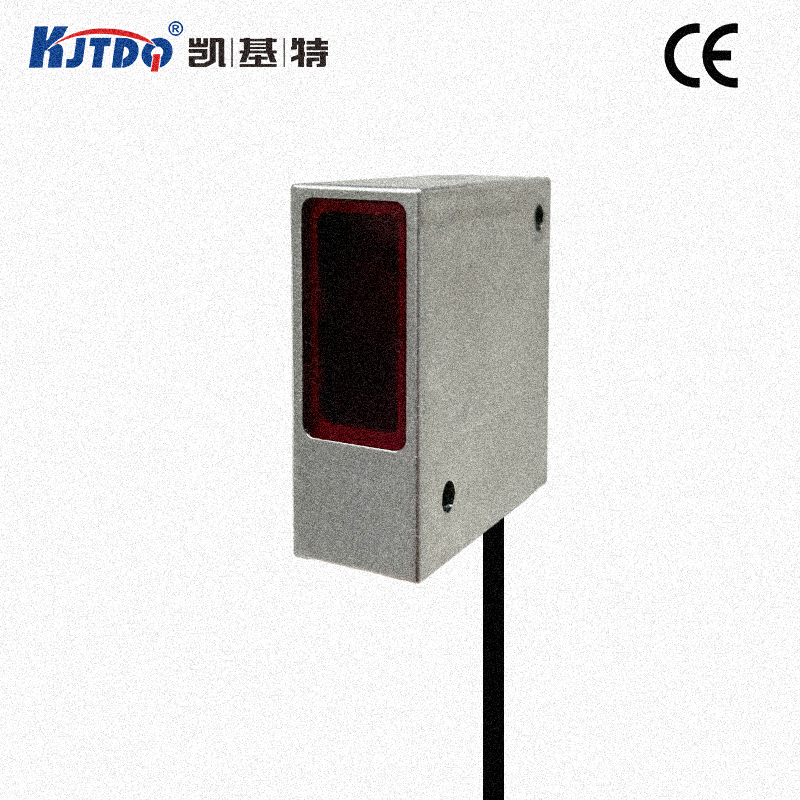
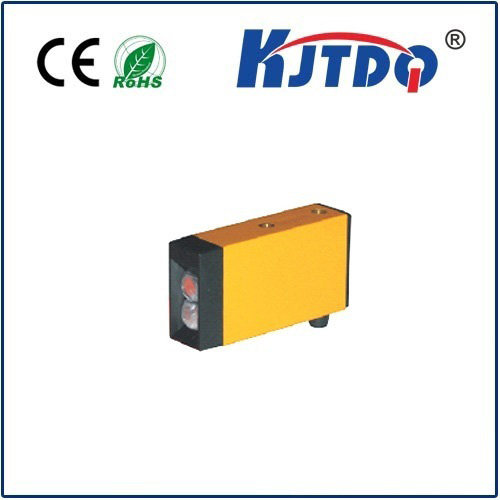
In the rapidly evolving landscape of industrial automation, the photoelectric sensor switch stands as a cornerstone technology, enabling precise, non-contact detection across countless applications. Unlike mechanical switches or manual inspections, these devices offer unparalleled accuracy, speed, and durability by utilizing light beams to sense the presence, absence, or distance of an object. The core principle involves an emitter that projects a light beam—often infrared, visible red, or laser—and a receiver that detects changes in the received light signal. When an object interrupts or reflects this beam, the sensor triggers a switch output, seamlessly integrating with control systems to initiate actions like stopping a conveyor belt, counting items, or positioning components.
The advantages of implementing photoelectric sensor switches are manifold and directly impact operational bottom lines. Their non-contact nature eliminates physical wear and tear, leading to significantly longer service life and reduced maintenance costs compared to mechanical limit switches. They are capable of detecting a vast range of materials, including glass, metal, plastic, and liquids, regardless of color or surface texture in many models, providing exceptional versatility. Furthermore, their fast response times, often in microseconds, are critical for high-speed production lines where milliseconds matter. This combination of reliability and precision minimizes errors, reduces product waste, and ensures consistent quality control, directly enhancing overall equipment effectiveness (OEE).
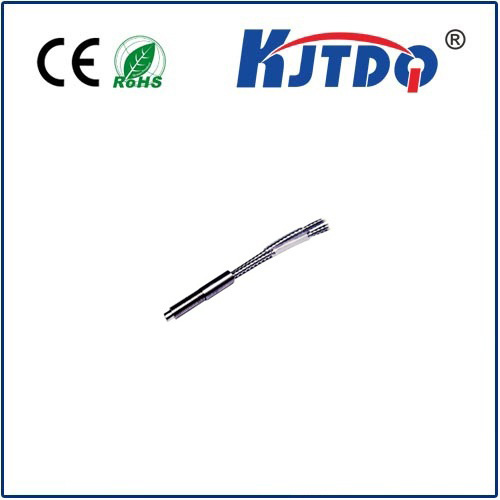
Various types of photoelectric sensors cater to specific environmental and application needs. Through-beam sensors, with separate emitter and receiver units, offer the longest sensing ranges and highest reliability for clear interruption detection. Retro-reflective sensors use a reflector to bounce the beam back to a combined unit, simplifying installation for medium-range tasks. Diffuse or proximity sensors house both elements in one housing, detecting light reflected directly from the target, ideal for short-range detection and color differentiation. Specialized versions include background suppression sensors for precise range-based detection and fiber optic sensors for extremely confined or high-temperature spaces.
When selecting a photoelectric sensor switch for a project, several key factors demand consideration. The sensing range must accommodate the required working distance, while the sensing mode (through-beam, retro-reflective, diffuse) should match the physical layout and object characteristics. Environmental conditions are paramount; sensors rated with high Ingress Protection (IP) codes are necessary for dusty, humid, or washdown environments common in food processing or pharmaceuticals. The output type (e.g., NPN, PNP, analog, IO-Link) must be compatible with the existing programmable logic controller (PLC) or machinery. Additionally, features like adjustable sensitivity, built-in timers, and diagnostic indicators can greatly simplify setup and troubleshooting.
Real-world applications of photoelectric sensors are ubiquitous. In packaging lines, they accurately count bottles, detect label presence, and monitor fill levels. In automotive assembly, they ensure robotic arms correctly pick and place components. Within warehouse automation, they guide autonomous mobile robots (AMRs) and verify barcode scanning positions. Their role in safety systems, such as creating light curtains to protect workers near hazardous machinery, underscores their critical importance beyond mere process control. The integration of smart sensors with Industrial Internet of Things (IIoT) platforms is now providing predictive maintenance data, alerting technicians to lens contamination or performance drift before a failure occurs.
The future of photoelectric sensing is intertwined with Industry 4.0. Advances in miniaturization, laser technology, and embedded intelligence are creating sensors that are more robust, energy-efficient, and communicative. The emergence of photoelectric sensors with integrated IO-Link communication provides not just a simple switch signal but a wealth of parametric data—such as signal strength, temperature, and operating hours—enabling deeper process analytics and centralized configuration. This digital transformation empowers manufacturers to build more adaptive, transparent, and efficient automated systems.
In conclusion, the photoelectric sensor switch is far more than a simple detection device; it is a vital enabler of modern industrial efficiency, quality, and safety. By providing reliable, non-contact sensing, it forms the essential sensory layer of automated systems. Choosing the correct sensor type and specifications for the specific application is crucial for maximizing performance and return on investment. As technology progresses, these versatile components will continue to evolve, driving further innovation in automation and smart manufacturing landscapes worldwide.