In today's rapidly evolving industrial landscape, the demand for reliable and efficient automation components has never been higher. Among the critical elements driving this transformation are photoelectric switches and optical sensors. These devices serve as the eyes of automated systems, enabling precise detection, measurement, and control in a wide array of applications. From manufacturing assembly lines to packaging machinery, and from security systems to consumer electronics, photoelectric switch optical sensors play a pivotal role in enhancing productivity, ensuring safety, and reducing operational costs.
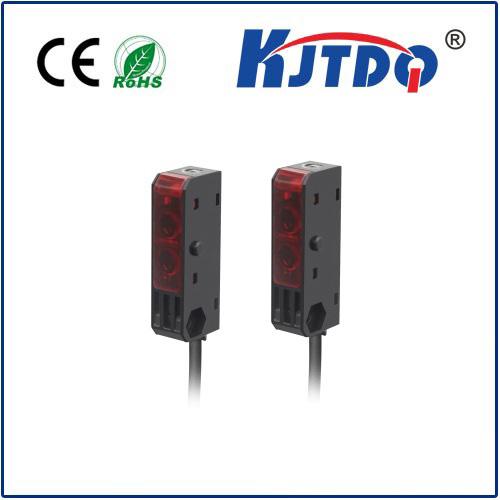
A photoelectric switch optical sensor operates on a simple yet powerful principle: it uses light to detect the presence, absence, or distance of an object. Typically, these sensors consist of a light emitter (such as an LED or laser diode) and a receiver (like a phototransistor or photodiode). When the emitted light beam is interrupted or reflected by an object, the receiver detects the change and triggers an electrical signal. This signal can then be used to activate or deactivate machinery, count items, monitor positions, or initiate other automated processes. The versatility of this technology lies in its various operating modes, including through-beam, retro-reflective, and diffuse reflective sensing, each suited to specific environmental and application needs.
One of the standout advantages of photoelectric switch optical sensors is their non-contact nature. Unlike mechanical switches that require physical touch, these sensors can detect objects without making direct contact, thereby minimizing wear and tear and extending the lifespan of both the sensor and the machinery. This feature is particularly valuable in harsh industrial environments where dust, moisture, or extreme temperatures might compromise traditional components. Additionally, photoelectric sensors offer high-speed response times, often in the microsecond range, making them ideal for fast-paced production lines where every millisecond counts. Their ability to detect a wide range of materials—including metals, plastics, glass, and liquids—further broadens their applicability across diverse sectors.
When selecting a photoelectric switch optical sensor for a specific application, several factors must be considered to ensure optimal performance. The sensing range, or the maximum distance at which the sensor can reliably detect an object, is a critical parameter. For instance, through-beam sensors can cover longer distances (up to several meters), while diffuse reflective sensors are better suited for shorter ranges. The type of light source also matters; red LED lights are common for general-purpose use, but infrared or laser-based sensors may be preferred for specialized tasks requiring higher precision or immunity to ambient light interference. Environmental conditions, such as the presence of dust, fog, or vibrations, can impact sensor accuracy, so choosing models with appropriate ingress protection (IP) ratings or built-in diagnostics is essential.
In practical applications, photoelectric switch optical sensors have revolutionized processes like object counting on conveyor belts, where they accurately tally items without physical contact, reducing errors and downtime. In automated packaging, these sensors ensure that products are correctly positioned and sealed, maintaining quality control. They also enhance safety in machinery by detecting when a protective guard is open or when a worker enters a hazardous zone, triggering immediate shutdowns to prevent accidents. Beyond industry, optical sensors are integral to everyday devices, from automatic doors that open as people approach to touchless faucets that conserve water in public restrooms.
Despite their robustness, photoelectric sensors are not without challenges. Factors like color variations, surface reflectivity, or ambient light can sometimes lead to false readings. However, advancements in technology have led to the development of sensors with background suppression, polarized filters, and adjustable sensitivity to mitigate these issues. Regular maintenance, such as cleaning lenses and checking alignments, also helps sustain performance over time. As industries move toward smarter automation with the Internet of Things (IoT), photoelectric switch optical sensors are increasingly being integrated with networked systems, allowing for real-time monitoring, predictive maintenance, and data-driven optimization.
In conclusion, photoelectric switch optical sensors are indispensable tools in modern automation, offering a blend of precision, durability, and adaptability. Their ability to operate without contact, coupled with fast response times and material versatility, makes them a go-to solution for enhancing efficiency and safety across various fields. As technology continues to advance, these sensors are poised to become even more intelligent and interconnected, driving further innovations in industrial and consumer applications. For businesses looking to streamline operations or integrate cutting-edge automation, understanding and leveraging photoelectric switch optical sensors is a step toward future-ready solutions.